
Best Case Scenario: Your Oyster is the world – Rolex marks a century of waterproof mastery by celebrating human endeavour
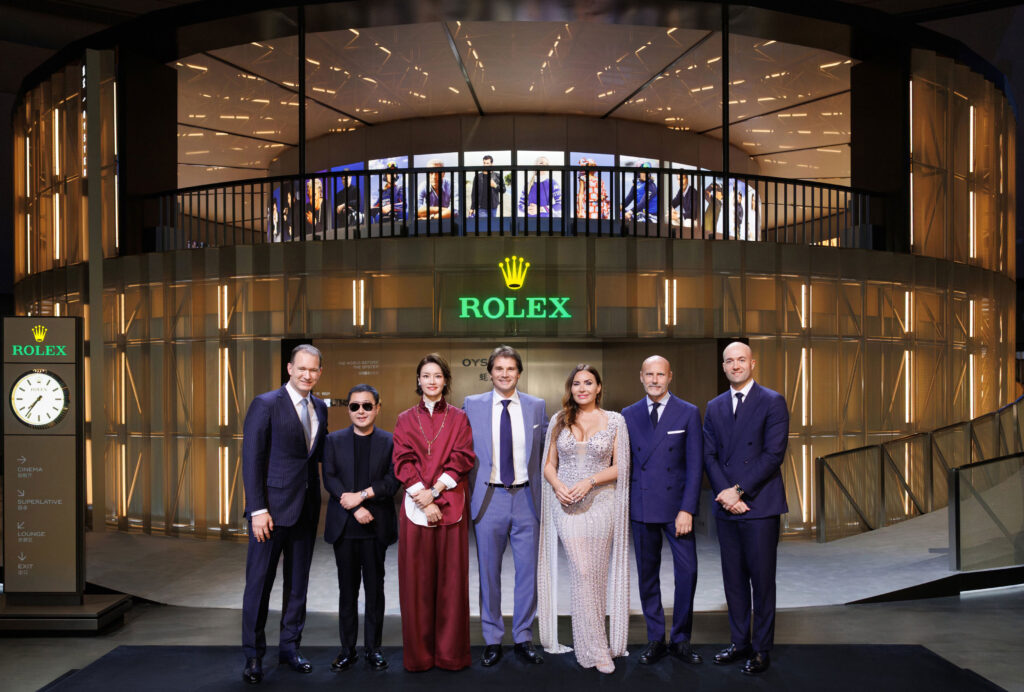
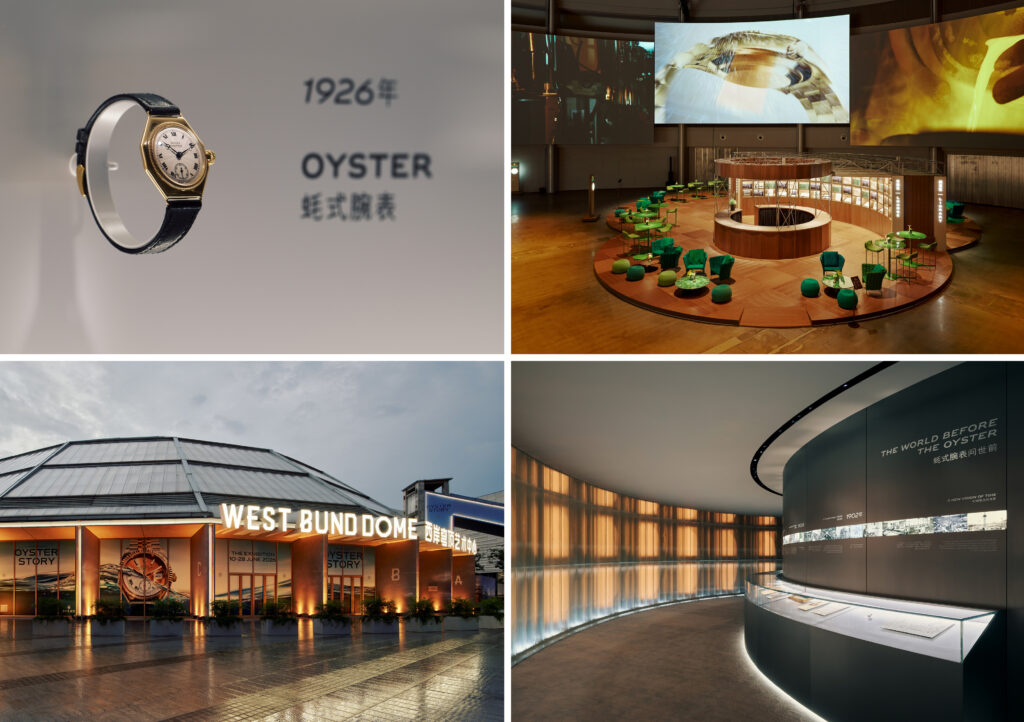
Shanghai has a way of making you feel like you’re walking through the future – even the pavements seem to be buffering at 4K. Then you get to the West Bund Dome, and suddenly the future puts on a tuxedo in a testament to the accurate passage of time.
Rolex’s Oyster Story, which made its international debut at the venue last month, was more than just a landmark exhibition marking the 100th anniversary of a revolutionary wristwatch. It was a very impressive, very immersive reminder that ‘waterproof’ used to be a humble promise, and then someone decided to take it personally, in a way that said: “We’re rewriting the laws of physics”.
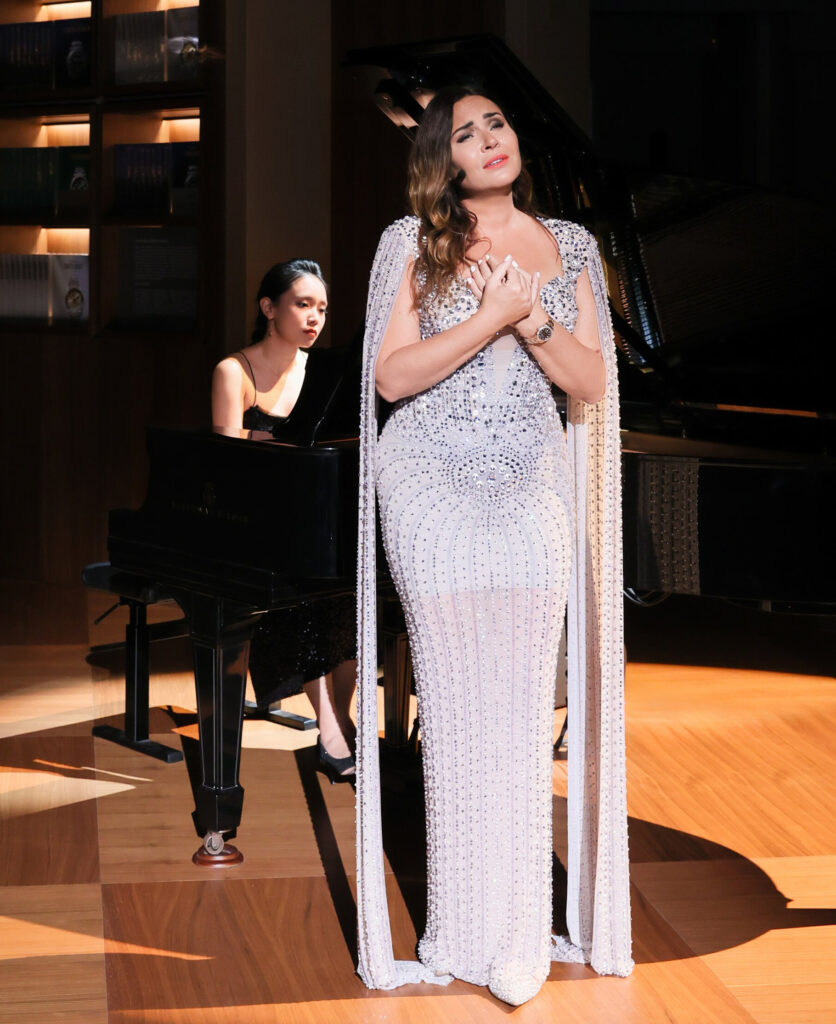
At the opening spectacle on 9 June, soprano Sonya Yoncheva’s voice didn’t so much fill the space as calibrate it. She sang the timeless Édith Piaf anthem Hymne à l’amour, and for a second, you remember that humans invented romance for the same reason they invented watches: because time is always slipping away and we’re always trying to hold it, either in our hands or in our hearts.
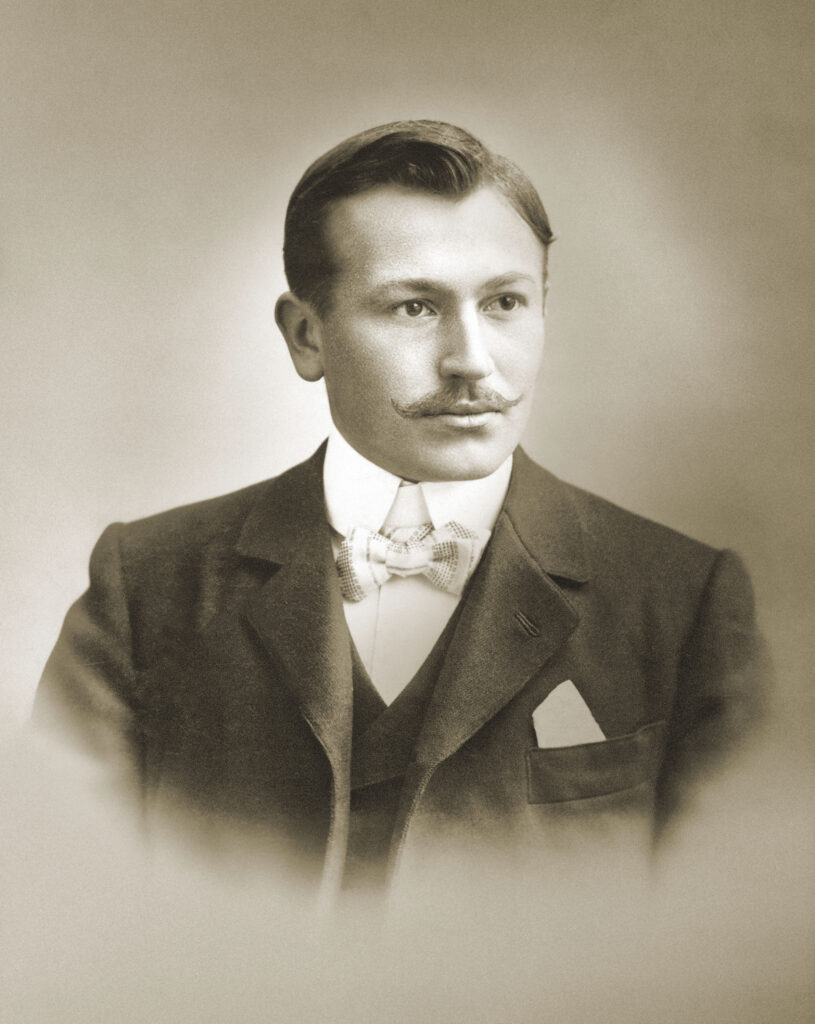
Then came a film, taking the audience through a century of Rolex founder Hans Wilsdorf’s visionary creation. And here’s where the exhibition gets real: the Oyster isn’t being celebrated like a collectible object. It’s being framed like a turning point. Like a chapter of time ‘before this’ and ‘after that’.
Genius Locked Down
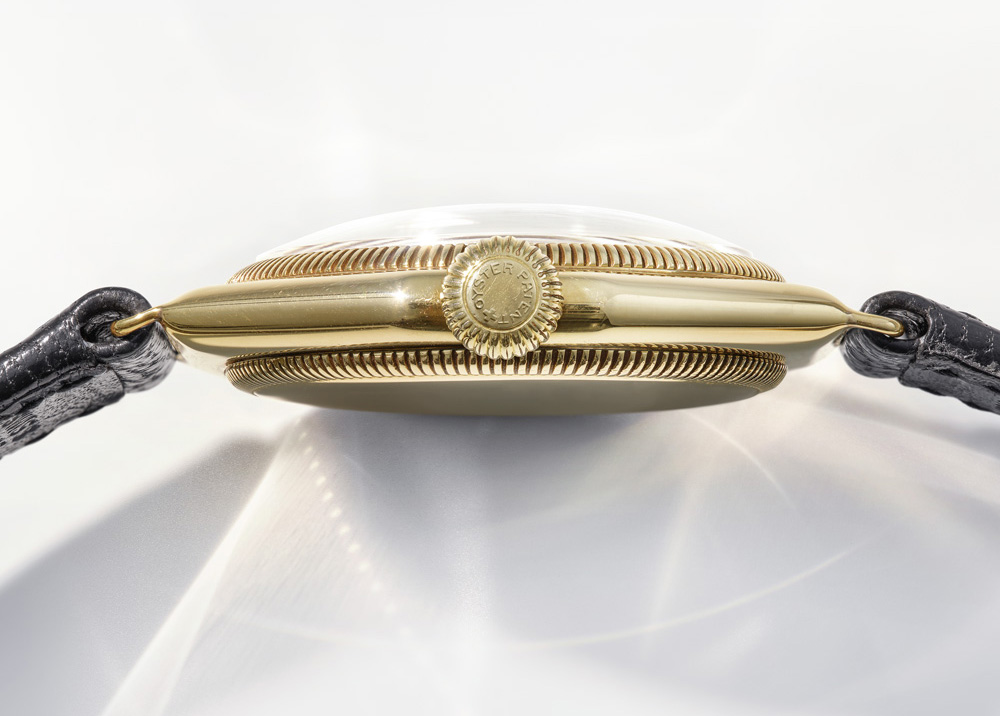
The Oyster exists because Wilsdorf believed a wristwatch could do more than look good on a wrist – it should unite precision and reliability in all conditions. The original Oyster case, launched in 1926, was a horological breakthrough: screwed down, hermetically sealed, waterproof and dustproof in a way that wasn’t just marketing. It was a challenge.
That’s the part that hits you hardest, because watches today are everywhere. Everyone’s got one, even if they pretend they don’t care about it. But this exhibition makes you feel the difference between ‘It’s a watch’ and ‘It was built to survive’. It showcases the divide between style and survival, between decoration and evidence. Some exhibitions celebrate anniversaries with balloons and speeches. This show does it like history as a full-body experience.
The Oyster Story runs as a sequence of spaces, each one pulling you deeper into the theme that the Oyster didn’t just change Rolex; it changed what a watch was allowed to be. Not just pretty, not just accurate on a desk, but accurate when the world is messy.
Main Spring
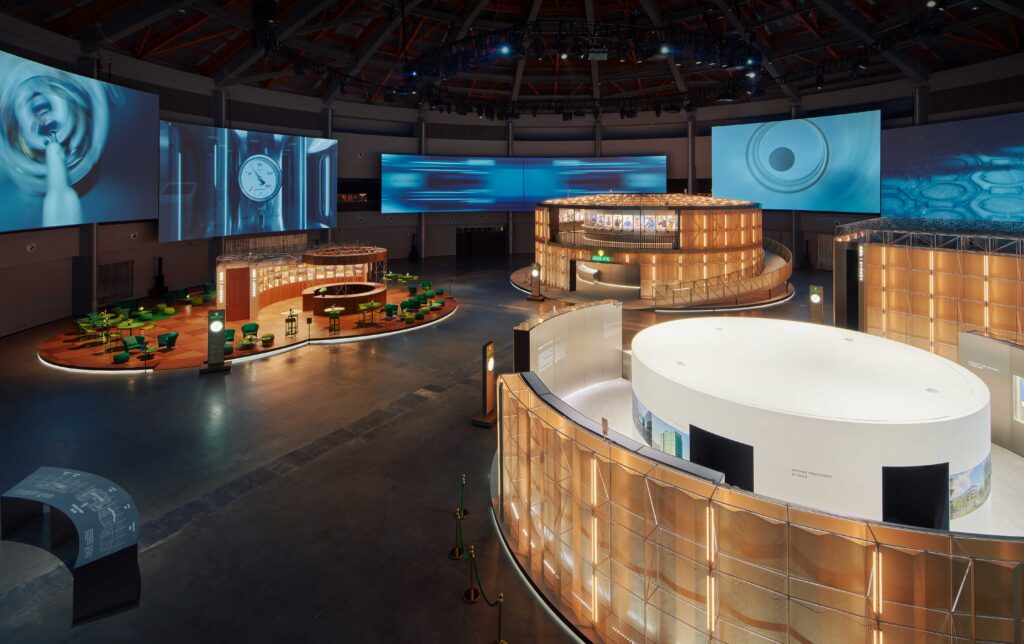
In the main pavilion at the West Bund Dome, visitors were surrounded by iconic models and contemporary creations – rare timepieces, real components, and the feeling of touching the future with your eyes. Cleverest of all was the way they were displayed: rather than appearing like museum trophies, they were presented as chapters.
There was also an emphasis on authenticity. Privately owned watches kindly loaned for the event were displayed alongside rare and iconic pieces and components in a reminder that the Oyster didn’t arrive through magic – it arrived through obsession. Every watch is an ecosystem of tiny decisions: case, bezel, crown, movement, every part working like a team that refuses to lose. The exhibition doesn’t want you to just look at the Oyster; it wants you to understand it.
Witnesses of Time
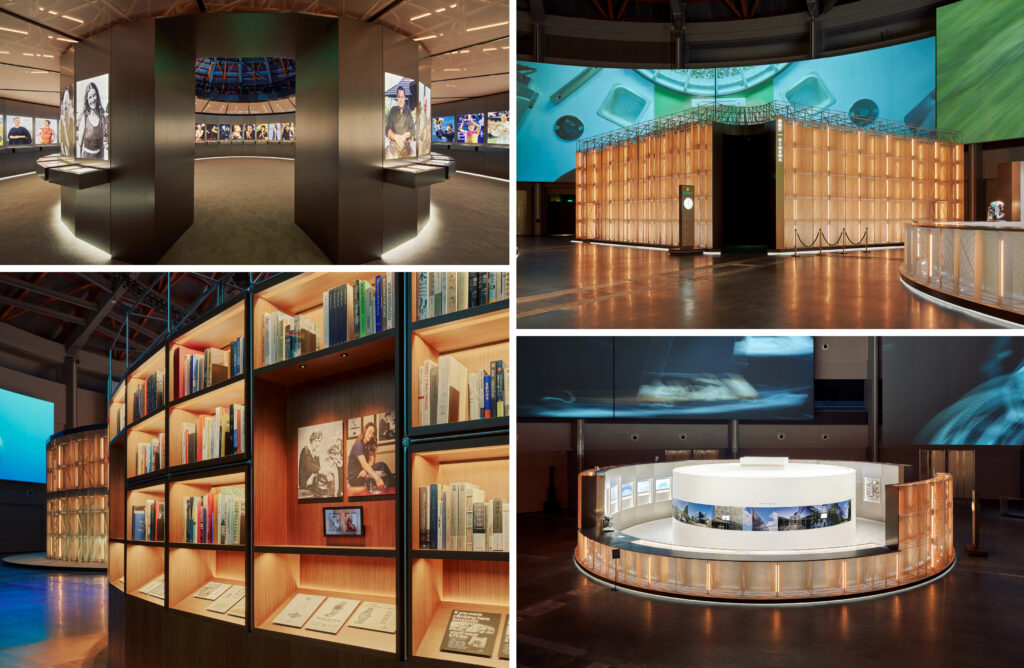
The first floor was home to an exclusive display of 100 portraits of legendary Rolex watch wearers. And yes, portraits are portraits, but viewing them prompted a more profound realisation. The Oyster’s real story is the people who tested it, then kept going. The sailors, the adventurers, the pioneers – people who didn’t just want a watch, but a tool that could keep up with their ambitions.
This turns the brand into something bigger than luxury. It speaks of a timeline of human determination and endeavour, of people strong and bold enough to say “we’re not done yet”.
Tick Tock Teachings
Once inside the ‘Superlative’ pavilion, it was like the show changed dialect. If the first rooms were about story, this one was about craft. The exhibition breaks down the watchmaking process – from materials and movements to dials, bezels, cases and bracelets – into the kind of detail you only encounter when someone’s explaining a hobby they’ve been doing since the dinosaurs.
Education about the brand’s enhanced Superlative Chronometer certification – expanded this year to embrace additional testing criteria – wasn’t presented as a dry checklist to tick off. It was presented as a philosophy. A reminder that the Rolex manufacture is built upon seven pillars of excellence: precision, waterproofness, self-winding, autonomy, resistance to magnetism, reliability and durability. For the Oyster and the brand, performance is the only love language that counts.
Around the Clock
At the heart of the pavilion is an immersive experience dedicated to Rolex’s proprietary optical atomic clock, an ultra-precise reference instrument using laser-stimulated rubidium atoms to define the second with extraordinary accuracy. And it got me thinking – a watch is still small, but the ambition is enormous.
It’s one of those moments when you realise Rolex isn’t just celebrating the past. It’s highlighting what’s possible next and doing it with technology that makes normal time feel like there is always more.
History Loop
A cinema space with a film retracing the Oyster’s history continuously was an invitation to walk through a legend at your own pace. The Library Lounge allowed a shift from spectacle to substance. Publications about watchmaking, sports, arts and preservation served as reminders that time isn’t only about minutes and seconds. Time is also about culture, about what humans value enough to preserve. At every turn, the exhibition pulls the thread from engineering into humanity.
Countless large screens formed a cyclical, colour-themed gallery, depicting watches and components; Rolex’s stellar line-up of Testimonees; iconic wearers; and images of sport, culture and nature. This circular structure never fully lets you settle. It keeps nudging you back to the idea that innovation isn’t a straight line; it’s a loop, and one that keeps getting faster.
Milestone Mentality
Oyster Story leans into the idea that Hans Wilsdorf believed excellence isn’t a slogan – it’s what happens when your product survives real conditions. And this ethos is embodied in milestones. The spirit of waterproof reliability began in 1926, with the rise of a watch named for its ability to remain submerged underwater while protecting the delicate mechanism inside.
It was immortalised the following year when Mercedes Gleitze – wearing an Oyster – became the first British woman to swim the English Channel. The Perpetual (Rotor) part of the name arrived in 1931 – Rolex’s patented automatic, self-winding mechanism powered by the natural movement of the wrist.
And so the story continues. Landmark follows landmark, each invention backed by decades of testing in demanding environments, with explorers and pioneers shaping what the watch becomes next. This exhibition makes it apparent that the Oyster is a passport to the world: not for travel, but for challenge.
Accurate to the Last
The grand opening evening in Shanghai climaxed in fireworks along the banks of the Huangpu River. A drone light show and architectural projection mapping narrated the Oyster’s epic century: from the first watch in 1926 to legendary feats across sea and sky, from deep depths to mountain heights; history projected onto the city like the city itself is part of the mechanism. A radiant Rolex crown and a ‘100’ emblem suspended in the sky officially inaugurated the global debut of the exhibition.
At the end of Oyster Story, you realise the centenary isn’t only about what Rolex built in 1926, or what it refined in 1931, or how watchmaking improved decade by decade. It’s about the attitude behind the invention. Because in a world that’s always trying to rush you or distract you, the Oyster’s promise is almost stubborn: time will pass, but accuracy can fight back.