

Call of the Wildebeest: In Tanzania, the rush of the Great Migration unfolds in a setting of hushed luxury
There are destinations that promise adventure, and there are those that redefine it. Tanzania is among the latter, a land where nature still performs on its own grand terms, where luxury is measured not in excess but in privilege: the privilege of solitude, silence and proximity to the raw pulse of the Earth itself. For the discerning traveller, this East African jewel offers more than a safari; it offers revelation.
Flying over the Serengeti at dawn is an initiation. Within this magnificent national park in the country’s north, bordering Kenya, the horizon curves in gold, the plains stretched vast and freckled with acacia and shadow. For a moment, it feels as if the entire continent exhales below you. Then, as the aircraft descends, the scale comes alive – the movement of thousands upon thousands of wildebeest sweeping across the grasslands, zebra stripes flashing in the morning light, and the slow, regal silhouette of a giraffe turning toward the sun.

The Great Migration is nature’s supreme theatre. More than 1.5 million wildebeest, accompanied by zebras and gazelles, circle the Serengeti-Mara ecosystem in an endless swarm of life. The herds calve in the southern plains between January and March, turning the golden grass silver with their young. For guests at the prestigious tented lodges of Singita Grumeti, at Mwiba Lodge, or &Beyond’s Serengeti Under Canvas, the spectacle feels private and unfiltered. From your deck, Champagne glass in hand, you may hear the low thunder of hooves before you see it. Seasoned in the poetry of the landscape, guides interpret the choreography – the lioness crouched expectantly in amber grass, the soft bleat of a lost calf, the wind rising before rain.

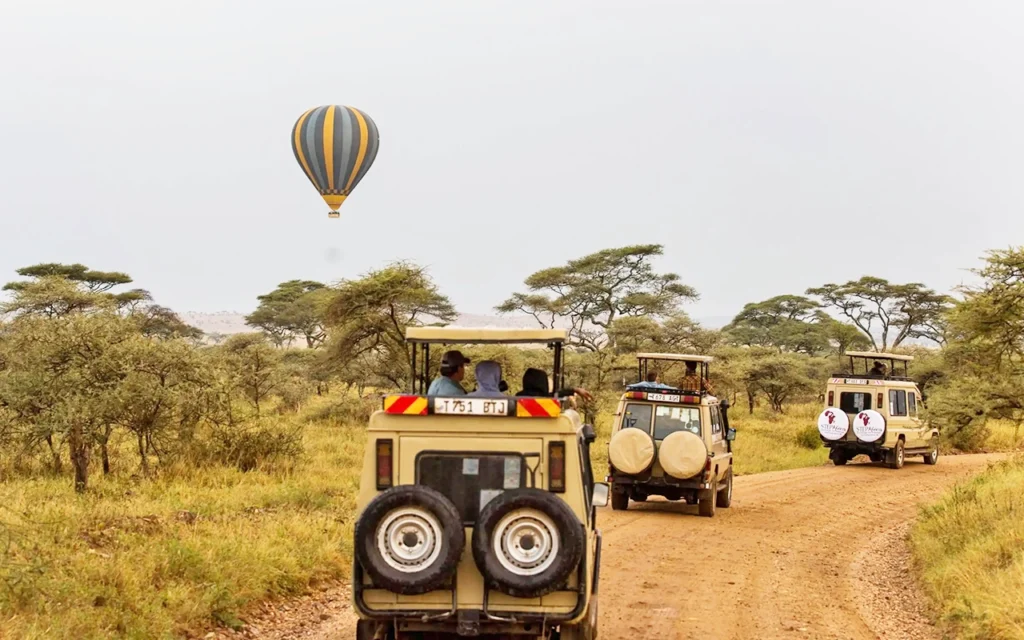
Yet the Serengeti’s magic extends beyond migration. Throughout the year, the ecosystem hums with quiet dramas as cheetahs sprint through whirls of dust, elephants move with stately calm, and crowned cranes preen amid the shallows. Hot‑air balloon safaris lift visitors gently above it all, tracing the flow of rivers like ancient brushstrokes. Afterwards, each lodge returns guests to hushed luxury: cool towels, silver service and interiors that merge African craft with exquisite restraint. In the Serengeti, the wild may rage outside your canvas walls, but within, stillness reigns.

Crater Glory
Few places in the world induce such awe as the Ngorongoro Crater in the eponymous conservation area neighbouring the Serengeti. This is the world’s largest inactive and intact volcanic caldera, and the descent from its mist‑edged rim feels like a passage into a painting –clouds drifting high above, forests tumbling downward toward sunlit plains that glimmer with streams and salt pans. It is a self‑contained Eden, a sanctuary where the Big Five roam as though time has paused.

At dawn, the mist lifts like gauze from the rim, revealing elephants striding through dew‑soaked grass, lions stretching beneath fever trees, and flamingos decorating the lakes in blush pink. The experience is both cinematic and spiritual: a reminder that humans are mere guests in this wild realm. The Maasai, guardians of tradition, still move their cattle along ancestral routes. A manyatta visit, arranged with care and respect by luxury lodgings like Abercrombie & Kent’s Ngorongoro Crater Camp, reveals a deeper harmony between land and livelihood – an understanding that conservation flourishes when cultures thrive beside nature, not outside it.

Quiet Majesty
For those who value space and stillness, Tarangire National Park offers an elegant pause after the grand spectacles of Serengeti and Ngorongoro. Often bypassed by conventional itineraries, it rewards the connoisseur who lingers. Lying southeast of Ngorongoro Crater, this is a land of giants – towering baobab trees and great herds of elephants that dust themselves crimson beneath their shade. During the dry season, life funnels toward the Tarangire River, where lions lie concealed among reeds and kudu step delicately from the bank to drink.

At Chem Chem Lodge, luxury takes on a nostalgic refinement: tented suites draped in linen, outdoor showers with views to infinity, lanterns flickering beside claw‑foot tubs. Here, one might rise before dawn for a guided walk along elephant paths or linger through the afternoon on the private deck.
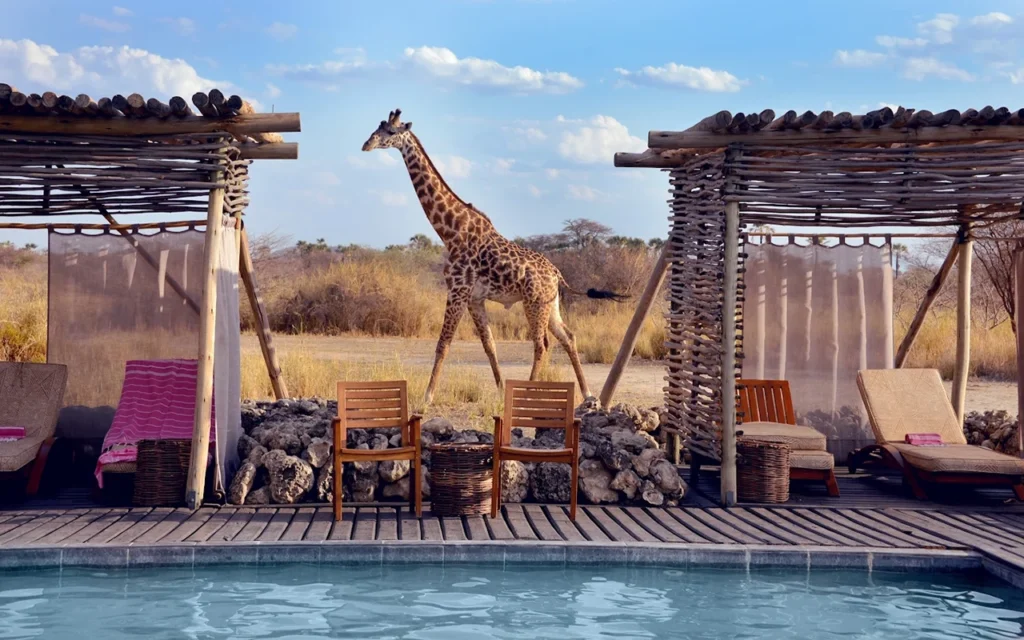
Tarangire is also a haven for the ornithological aficionado. More than 400 species fill the air – lilac‑breasted rollers, hornbills, lovebirds – creating a dance of colour and wings. Watching them as dusk bleeds across the sky, you realise that wilderness luxury is comfort and wildness entwined – not about escape from the natural world but immersion in it.

Immense Wilderness
Ruaha, Tanzania’s largest park, is Africa pared to purity. Remote and vast, it is found in the centre of the country, off the main tourist map, by those who seek authenticity without audience. Here, the red earth cracks beneath ancient baobabs, the Great Ruaha River winds like molten steel through canyons and valleys, and large concentrations of the continent’s formidable predators – prides of lions and packs of wild dogs – weave their intricate hunts.

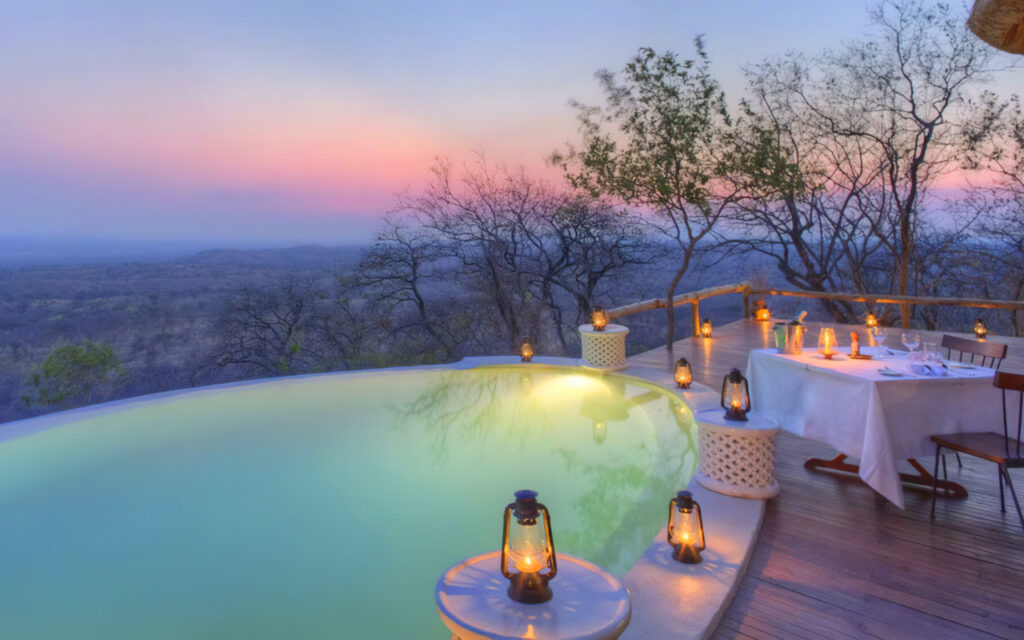
You may travel for hours without sighting another vehicle. The safaris feel intimate, almost primeval: a conversation between guide, landscape and the senses. Lodges like Jabali Ridge and Ikuka Safari Camp capture the mood with architectural grace – wood and stone curved into the hills, infinity pools reflecting the endless sky, and the distant tremor of elephants moving through miombo woodland.
Indian Ocean Oasis
Every great safari deserves an epilogue, and for many, it is Zanzibar, the idyllic counterpoint to Tanzania’s inland drama. After days of dust and adrenaline, the trade winds kissing this archipelago off the east coast, just north of Dar es Salaam, bring a softer cadence of salt, spice and rhythm.

A Unesco World Heritage, Stone Town glows with history. Narrow alleys curl between coral‑stone buildings in this ancient quarter of Zanzibar City, their carved doors telling tales of merchants long departed. Guided walks reveal a fusion of cultures – Swahili, Arab, Persian, European – that birthed a distinct, enduring allure. In the late afternoon, as the call to prayer drifts through the streets, cafés ignite their lanterns and the world slows to the island’s timeless pace.

Beyond the city, the coastline unfurls in ribbons of white sand and turquoise lagoon. Exclusive retreats such as The Residence Zanzibar and &Beyond Mnemba Island turn the ocean into a private sanctuary. Guests wake to breakfast by the surf, spend languid days diving among coral gardens, and dine under sequined skies to the soft hush of waves.

Crafting the Journey
Luxury travel in Tanzania is more about intention than itinerary. The leading firms curate personalised pathways for families tracking migration routes across exclusive concessions, or honeymooners drifting from the wild into whispers of the Indian Ocean. Every detail, from customs handling to Champagne chilled under a baobab tree, is orchestrated with seamless precision. Even the transitions between parks – by light aircraft, helicopter or scenic drive – become part of the narrative, revealing Tanzania’s immensity.
The country has matured into a benchmark for responsible luxury where exclusivity partners with sustainability. Many lodges fund anti‑poaching initiatives, support local artisans, and invest in education for surrounding communities. Zanzibar’s finest properties partner with local groups to protect marine life and preserve the island’s fragile ecology.

Amid a world ever more curated, Tanzania offers something rare: authenticity wrapped in grace, wildness tempered by elegance. For those who journey here, the reward is not simply seeing the wild, but feeling it – a visceral connection that lingers long after departure.