
Sands of Silence: A quiet journey through Mongolia’s Gobi Desert, where the dunes whisper under a monumental sky
In March, the Gobi Desert exists in a state of suspension. Winter has not fully released its hold, yet spring has begun to breathe softly across the land. It is a cold desert stripped of spectacle and sharpened by clarity, a place where silence carries weight and beauty reveals itself slowly. This is not the Gobi of postcards and peak-season itineraries. This is the Gobi at its most honest.

Sprawling some 1,600 kilometres (1,000 miles) from east to west across southern Mongolia and northern China, the Gobi is the sixth largest desert in the world. It defies the narrow definition of a desert, as it is not endless sand, but a mosaic of environments – rolling steppe, dry riverbeds, jagged mountains and sudden dunes rising like mirages from the plains. Frost and occasional snow reflect its location and position on a plateau that soars as high as 1,500 kilometres above sea level.
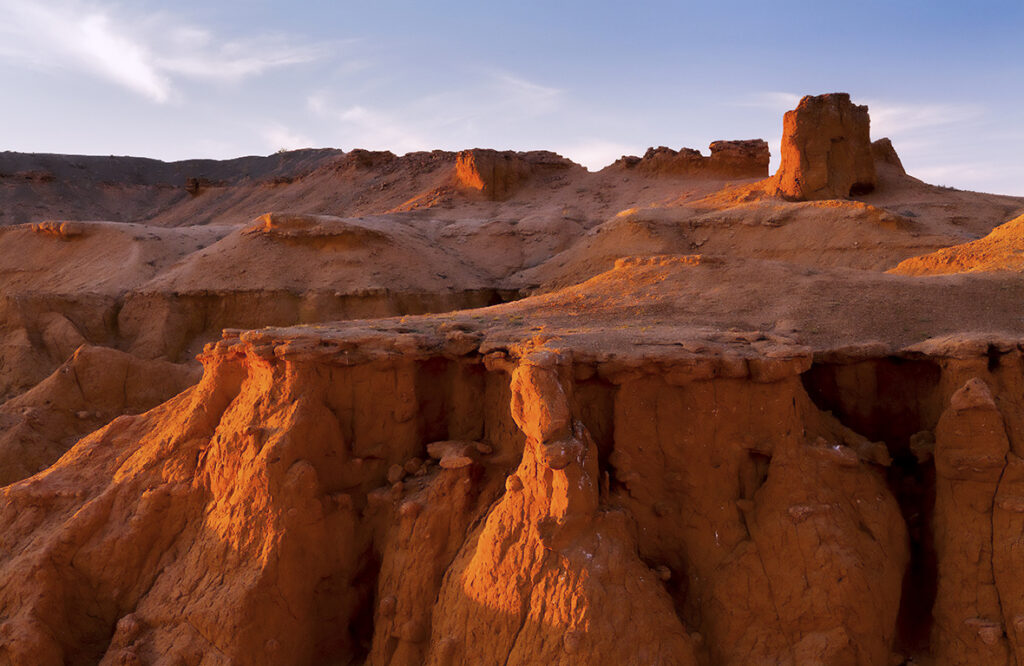
The landscape greets you in muted tones – soft ochres, dusty rose, pale limestone, and the faint silver of lingering ice – as you travel by jeep from the airport at Dalanzadgad, the capital of Omnogovi Aimag province in Mongolia’s far south. The sky feels enormous, stretching unbroken from horizon to horizon, and the March air is crisp, lending sharp edges to every rock and ridge.
Light behaves differently here, casting long shadows that shift slowly throughout the day. Without summer’s haze, distances appear closer than they are, and mountains tease the eye before retreating once more into the vastness. For visitors, there is a feeling of exposure in the Gobi, but not vulnerability. Instead, the openness offers a kind of reassurance. Nothing is hidden; everything is exactly as it appears.
Bird’s Eye View
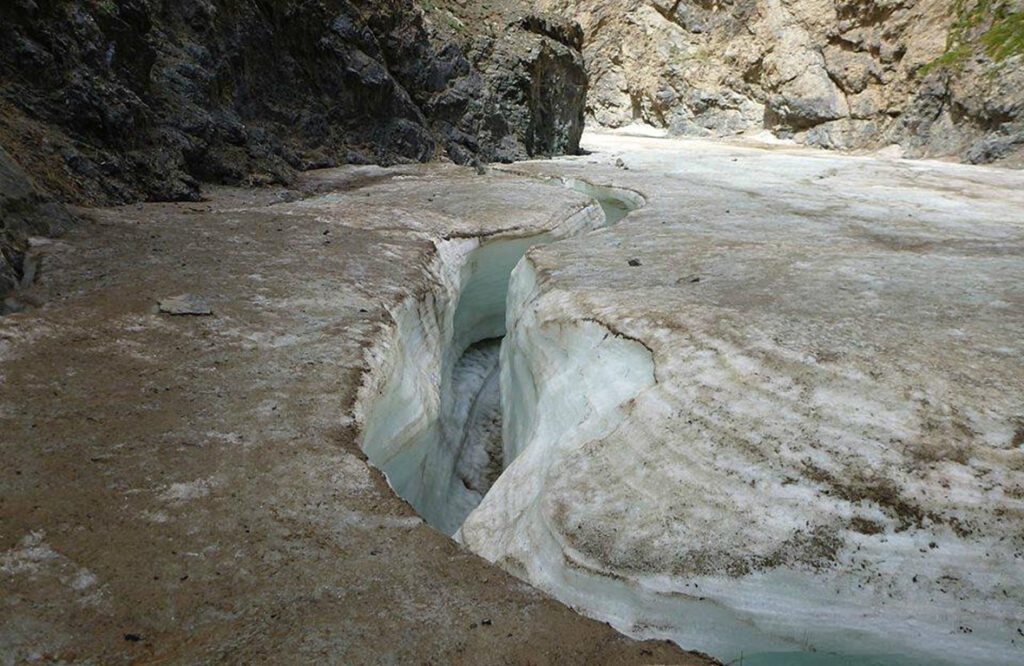
One of the Gobi’s most unexpected sights lies tucked within the rocky folds of Gurvansaikhan National Park, an hour’s drive from the airport. Yolyn Am, called Valley of the Vultures after the lammergeier (yol in Mongolian) circling above the narrow canyon, still holds thick sheets of ice, preserved by its towering stone walls.
Walking through Yolyn Am is an exercise in contrasts. The crunch of ice beneath your boots echoes softly as sunlight filters down in thin bands. Meltwater trickles along the edges, glistening like glass. The bearded vultures glide effortlessly overhead, indifferent to the season below. The canyon feels intimate, almost secretive. In early spring, when the ice has begun its slow retreat, Yolyn Am feels fleeting – an ephemeral moment suspended between seasons.
Dune Drama
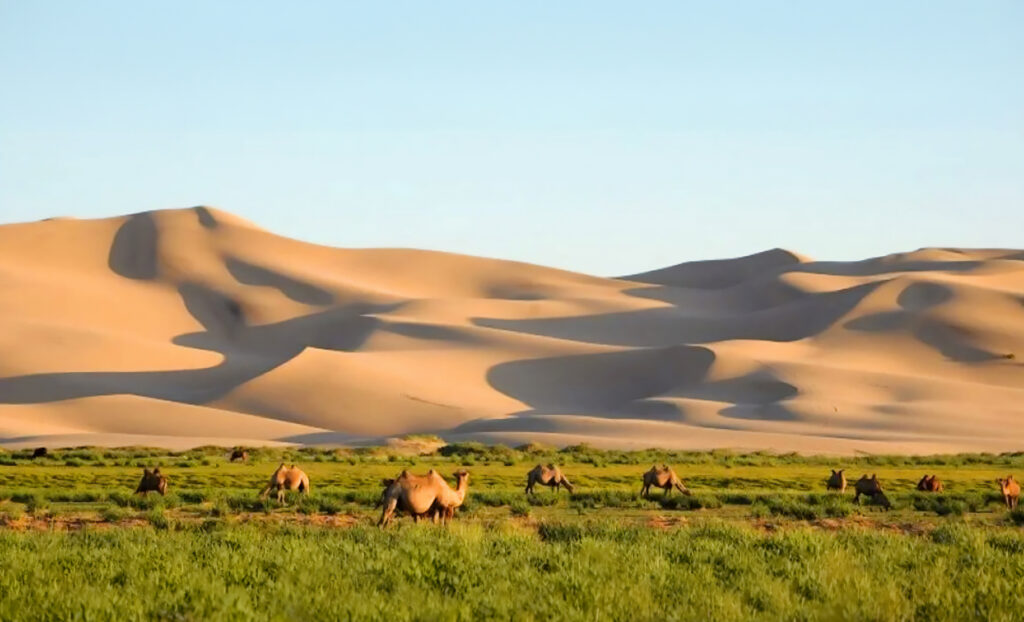
Then there are the dunes. Khongoryn Els, the largest and most iconic sand dunes in Mongolia, rise suddenly from the flat steppe like a golden ocean frozen mid-wave. Known as the Singing Sands, they stretch over 100 kilometres, dominating the southern Gobi with quiet authority. When the wind moves just right, the dunes hum the low, resonant sound that prompted their nickname. It is not loud, but it is unmistakable, as if the desert itself is speaking.
In early spring, the dunes are cool and firm, their surfaces rippled by winter winds. Climbing the 300-metre-high peaks is a meditative act, each step sinking softly into sand that feels surprisingly cold. The silence is profound, broken only by the whisper of grains shifting beneath your feet.
At the crest, the world opens completely. To one side, dunes cascade endlessly into shadow; to the other, open plains stretch towards distant mountains. As the sun lowers, the dunes transform from golden at noon, to amber by afternoon, and blushing rose as evening approaches.
Tented Luxury
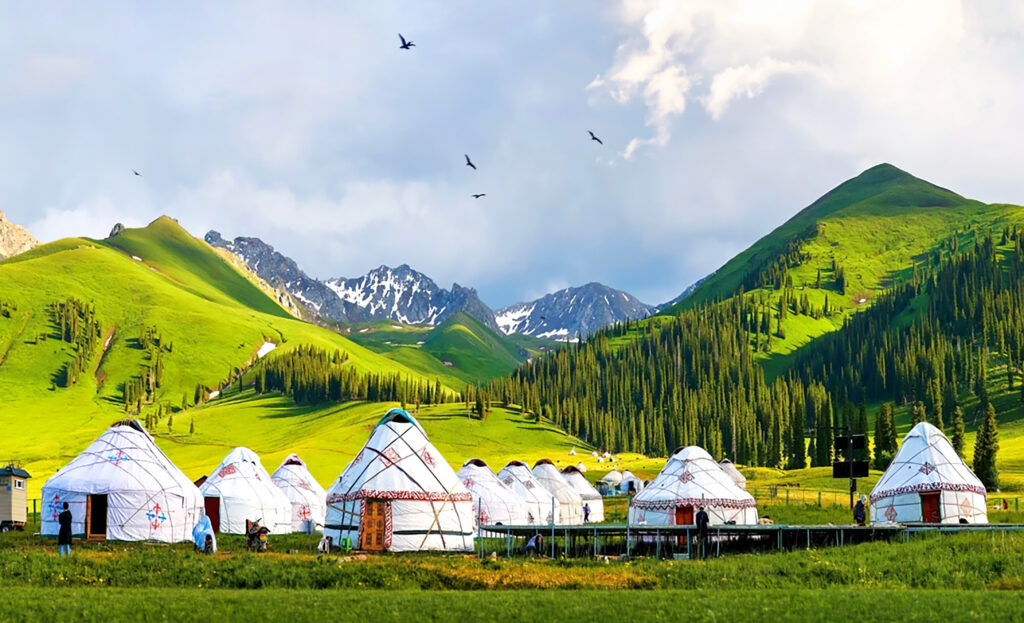
An upscale adventure in the Gobi revolves around a tented camp, sleeping in plush versions of the round, peak-roofed ger that nomads have called home for centuries. The exclusive Three Camel Lodge, lying on the edge of the Gurvansaikhan National Park, offers en-suite ger, heated by a wood stove and adorned with hand-painted furnishings and camel-haired blankets. Leave their warmth for horseback riding, trekking on the double-humped Mongolian camel, mountain biking, archery or viewing the prehistoric rock carvings on Bulagtai Mountain, the volcanic outcrop hovering in the background. For the ethical traveller, eco-lodges such as Gobi Mirage Lodge or Gobi Nomad Lodge are another option.
Staying near a nomadic camp offers a glimpse into a rhythm of life defined by weather and land rather than clocks. For the nomads, days begin with tending animals and end with shared meals under fading light. Evenings are quiet, illuminated by stoves and stars. There is no performance here, no attempt to package tradition for visitors. Life simply continues, as it has for generations.
Desert Dining
Meals are centred around comfort, nourishment and shared experience. Inside a ger, the air carries the scent of boiling milk and simmering meat. A bowl of suutei tsai, Mongolia’s iconic salty milk tea, is often the first offering. Rich and grounding, it warms the body instantly, especially on cold March mornings.
At dinner, there is often mutton or goat, slow-cooked until tender, accompanied by simple bread or steamed dumplings known as buuz. Seasoned lightly with salt, the clean flavours allow the quality of the ingredients to speak for themselves.
One of the most memorable dishes is khorkhog, a traditional barbecue where meat and vegetables are cooked with hot stones inside a sealed metal container. The stones infuse the food with smoky heat – believed to bring good health – and the ritual of sharing the meal, passing around the warm stones, feels as important as the food itself.

Hum of Life
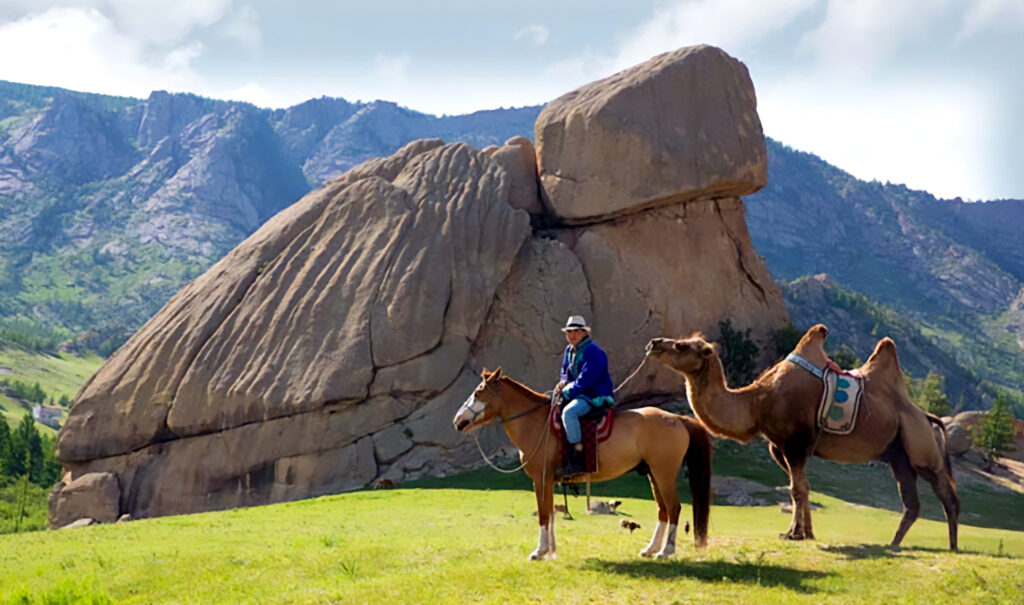
March is a transitional month for nomadic families, and as the journey from winter to spring pastures begins, a sense of anticipation permeates the desert. Livestock begin to stir more frequently. Horses graze cautiously at emerging patches of grass. Camels move with deliberate patience across the plains, their silhouettes perfectly suited to the landscape.
Perhaps the most striking feature of the Gobi in early spring is its silence. Without the buzz of peak-season tourism, the desert feels vast and contemplative. Wind moves across the plains in soft waves. Sand whispers along dune faces. Occasionally, the call of a bird or the distant low of livestock punctuates the stillness. This silence does something subtle but powerful: it slows the mind. Thoughts stretch out, unhurried; time feels less urgent, less fragmented.
Still Images
March light in the Gobi is a photographer’s dream. Clear air and low sun angles create dramatic contrasts and long shadows that sculpt the land hour by hour. Sunrises arrive quietly, washing the desert in pale pink and gold. Sunsets linger, stretching across the skyline in layers of colour that seem almost unreal. At night, the stars emerge in astonishing density, unchallenged by artificial light.
The sky feels closer here, as though it has lowered itself to meet the land. It is easy to understand why Mongolian culture places such reverence on nature – humility feels instinctive under this sky. This is a place that stays with you not because of what you saw, but because of how you felt while seeing it.
In a world increasingly defined by speed and spectacle, the Gobi offers something rare: stillness with depth. It is a destination that simply exists, vast and patient, waiting for those willing to meet it on its own terms. And long after you leave, when noise returns and schedules tighten, it is the memory of that silence – stretching endlessly beneath a pale Mongolian sky – that calls you back.