

Under the hammer: Fab Four auction sales (October 2026)
A Head of the Curve
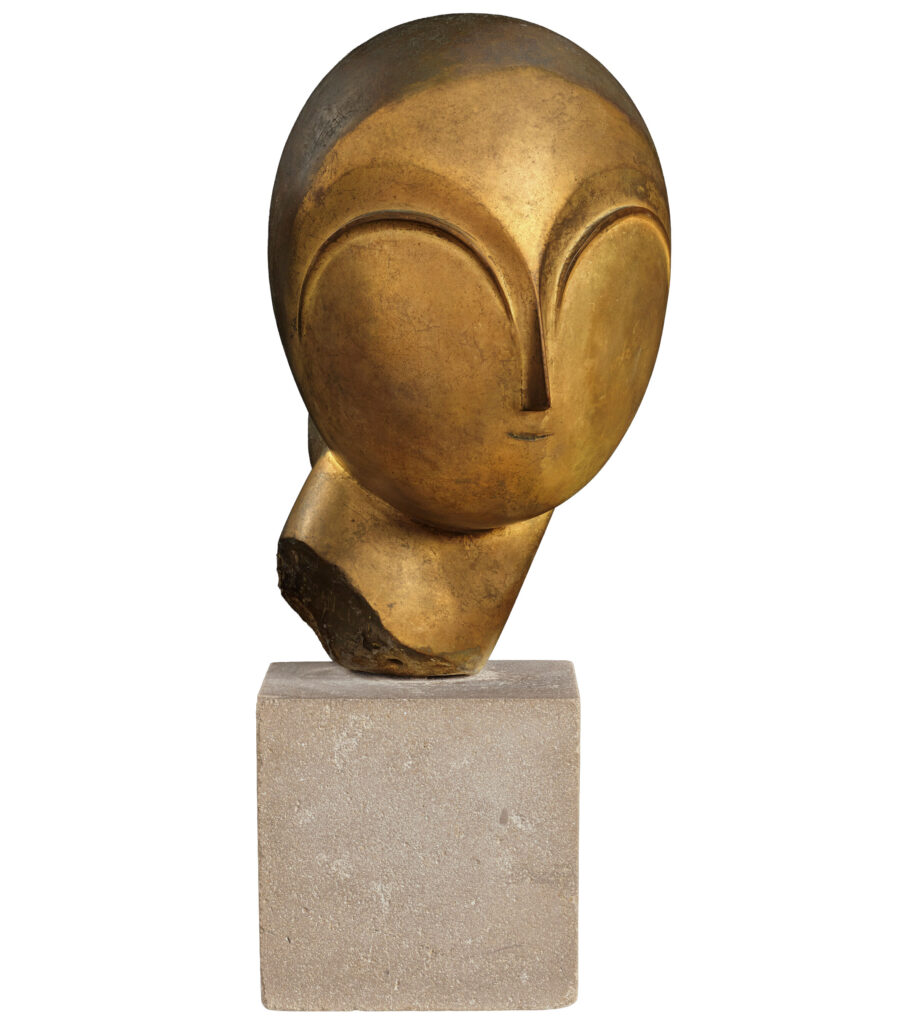
Constantin Brâncuși’s modernist masterpiece sculpture, Danaïde, recorded a historic gain at Christie’s New York earlier this year. Selling for an astounding US$107.6 million (HK$843.7 million), the gleaming gilded bronze head became the second most expensive sculpture ever sold at auction.
Executed around 1913, the Romanian sculptor’s avant-garde treasure represents a turning point in modern art history. Nodding to the Greek myth of King Danaus’s spouse-slaying daughters, it was modelled after Margit Pogany, then a Hungarian art student who served as his muse. Brâncuși expertly stripped away superfluous anatomical details to reduce the human face into a sleek, stylised and geometric oval form, featuring sweeping arced eyes. The gold-leaf finish beautifully accentuates the smooth contours, reflecting light to create an ethereal, highly spiritual atmosphere.
Danaïde serves as a brilliant testament to Brâncuși’s pioneering vision of capturing the essential spirit of an object rather than its literal shape. This landmark transaction illustrates how 20th-century sculpture continues to drive intense demand from the world’s wealthiest fine-art collectors.
Wellington Win

Sir Thomas Lawrence’s 1821 Portrait of Arthur Wellesley, 1st Duke of Wellington, established a new auction benchmark for depictions of the British military hero when it went under the hammer at Christie’s in London this summer. The record-breaking price of £9.7 million (HK$102.6 million) underscores not only the legacy of Britain’s leading portrait painter of the early 19th century but also an unfailing modern desire for old masters.
Painted some five years after Wellington triumphed over Napoleon Bonaparte at Waterloo, this majestic oil painting bypasses standard battlefield grandiosity. Instead of wearing a heavy dress uniform, glittering medals or dramatic regalia, the Iron Duke is portrayed intimately in civilian attire. The artist utilised chiaroscuro lighting to focus attention onto the subject’s face, whose sharp, classical profile and piercing gaze capture both a profound sense of stoic leadership and a rare, quiet vulnerability.
The portrait was originally owned by his close friend Charles Arbuthnot, the uncle of Hong Kong civil servant George Arbuthnot, for whom Arbuthnot Road is named.
Bruges Force
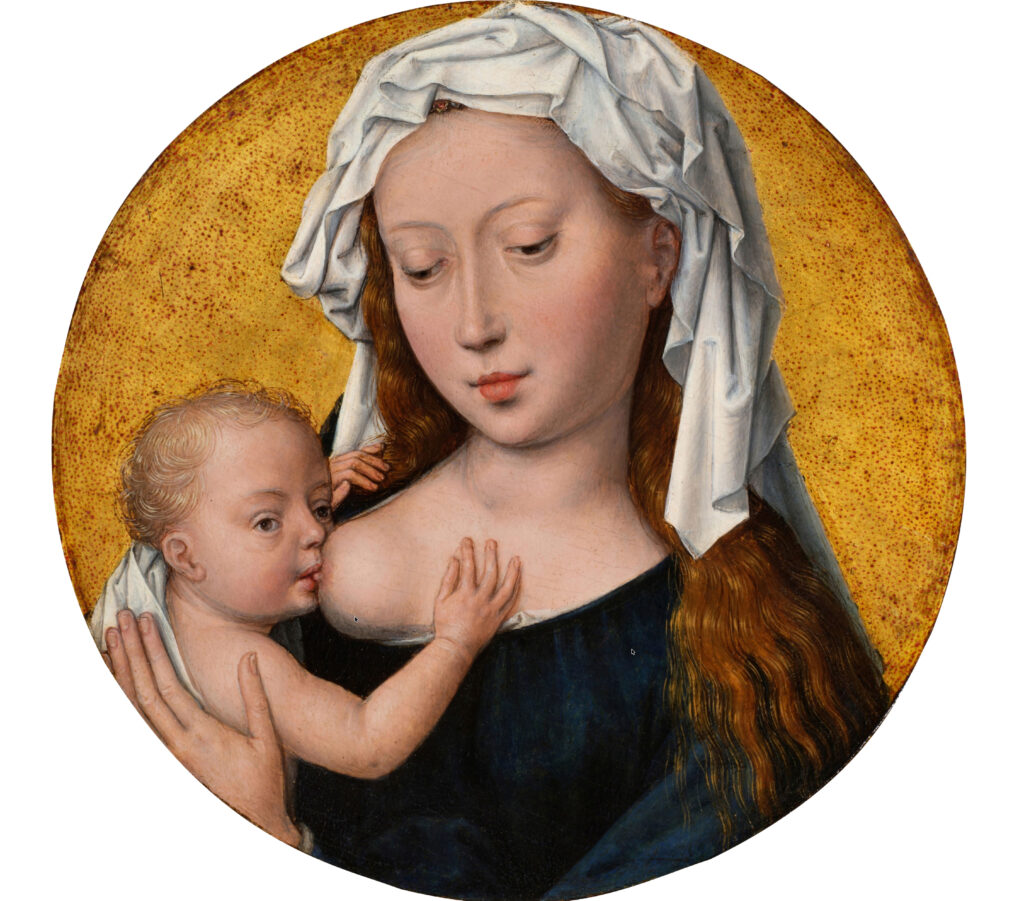
Hans Memling’s exquisite Northern Renaissance devotional panel, The Virgin Mary Nursing the Christ Child, comfortably achieved its pre-sale target at Sotheby’s Old Master auction in London. Changing hands for £3.5 million (HK$37.1 million), the tiny treasure surpassed the previous record for the revered German-Flemish artist’s work set more than a decade ago by Christ Blessing.
This intimate tondo painting in oil and gold on oak was created in the late 15th century in Bruges, where Memling was one of the leading artists and wealthiest citizens. It is celebrated for its tender emotional execution and enduring spiritual atmosphere. The Nursing Madonna (Virgo Lactans) is a powerful theological motif emphasising Christ’s true humanity.
Works of this quality painted more than 500 years ago are rare arrivals on the auction circuit. Remarkably preserved through the centuries in private European collections, the fragile wood panel demonstrates Memling’s signature technical mastery. His fluid use of translucent oil glazes creates a brilliant luminous quality, highlighting the soft features of the Virgin Mary and the radiant skin of the infant Jesus.
My Lovely Bones
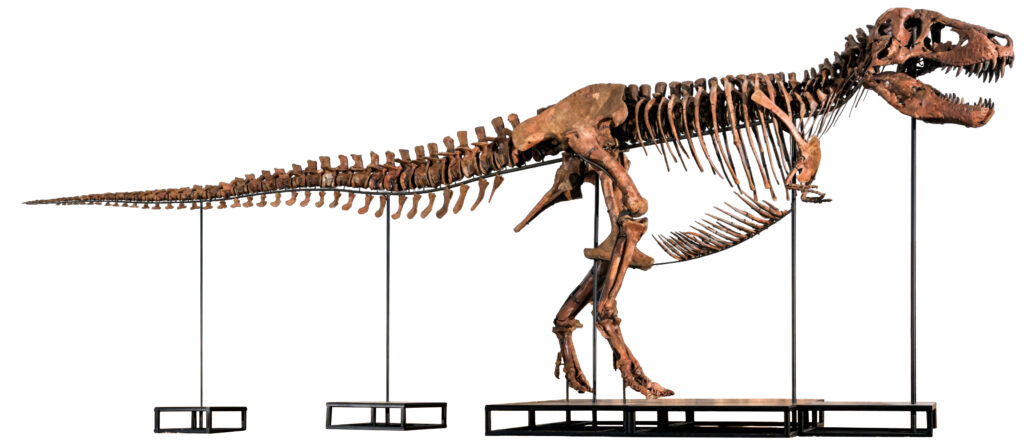
One of the largest and most anatomically complete of its species to be unearthed, ‘Gus’ the Tyrannosaurus rex hit the headlines at Sotheby’s New York this summer, going for an astounding US$50.1 million (HK$392.9 million). This monumental apex predator fossil shattered previous paleontology records to become the most expensive dinosaur skeleton ever sold at auction.
Gus was discovered within the fossil-rich Badlands of South Dakota and is named after the cattle rancher whose land he occupied for some 67 million years. This incredibly rare prehistoric specimen stands at an imposing 3.8 metres (12.5 feet) tall and stretches 11.6 metres (38 feet) in length.
Remarkably, Gus weighs in with a total of 183 exceptionally well-preserved original bone elements, making him 75-80 per cent complete in terms of bone mass. He is topped, though, by a T-rex called Sue, found in 1990 and boasting a bulk of more than 90 per cent. There has been a massive surge in global demand for world-class natural-history collectables in recent years, and Gus’s multi-million-dollar price tag underlines how museum-grade dinosaur fossils continue to capture the imagination.