
Under the hammer: Fab Four auction sales (July 2026)
Number’s Up
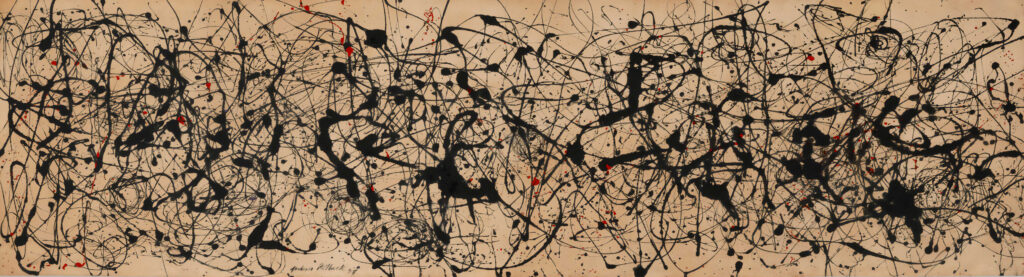
Jackson Pollock’s 1948 drip painting, Number 7A, sold for an extraordinary US$181.2 million (HK$1.42 billion) at Christie’s in New York in May, attaining the fourth highest price ever achieved at auction for an artwork. It was painted in the year widely considered to be the American artist’s creative breakthrough, leading to the birth of Abstract Expressionism as a global force.
This was the moment Pollock fully realised his revolutionary drip technique, placing a huge canvas on the floor and moving around it to apply pigment in a near-choreographed performance. Here, trails of black enamel are dotted with flashes of red, forming a dense yet remarkably balanced composition that pulses with energy. Far from random, the work reveals a masterful sense of rhythm and control while feeling immersive and alive.
The US$181.2 million result underscores Pollock’s enduring dominance at the top tier of the art market. More than a painting, Number 7A captures the raw innovation that redefined modern art. It stands as a defining icon of the 20th-century spirit – bold, radical and timeless.
Bible Class

Marlene Dumas’ poignant The Annunciation achieved US$1.95 million (HK$15.3 million) at Sotheby’s recent Now & Contemporary auction in New York, reaffirming the powerful market presence of one of today’s most influential figurative painters. Born in Cape Town and based in Amsterdam, the artist is known for her emotionally charged works, particularly those that reinterpret historical themes through a modern lens.
Rather than depicting the biblical scene in traditional narrative detail, Dumas distils the Archangel Gabriel’s message to Mary that she will give birth to Jesus into atmosphere and psychological tension. Her figures often appear suspended in washes of translucent pigment, emerging softly from pale, undefined backgrounds. Painted in 1988 in bleeding strokes of teal, ochre and scarlet, this intimate composition appears as a meditation on vulnerability, revelation and human connection.
Dumas’ fluid brushwork and restrained palette create a sense of fragility, as though the image might dissolve at any moment. The Annunciation represents a thoughtful engagement with timeless themes of faith, identity and introspection rendered with a sensitivity that feels both modern and enduring.
Snow Success
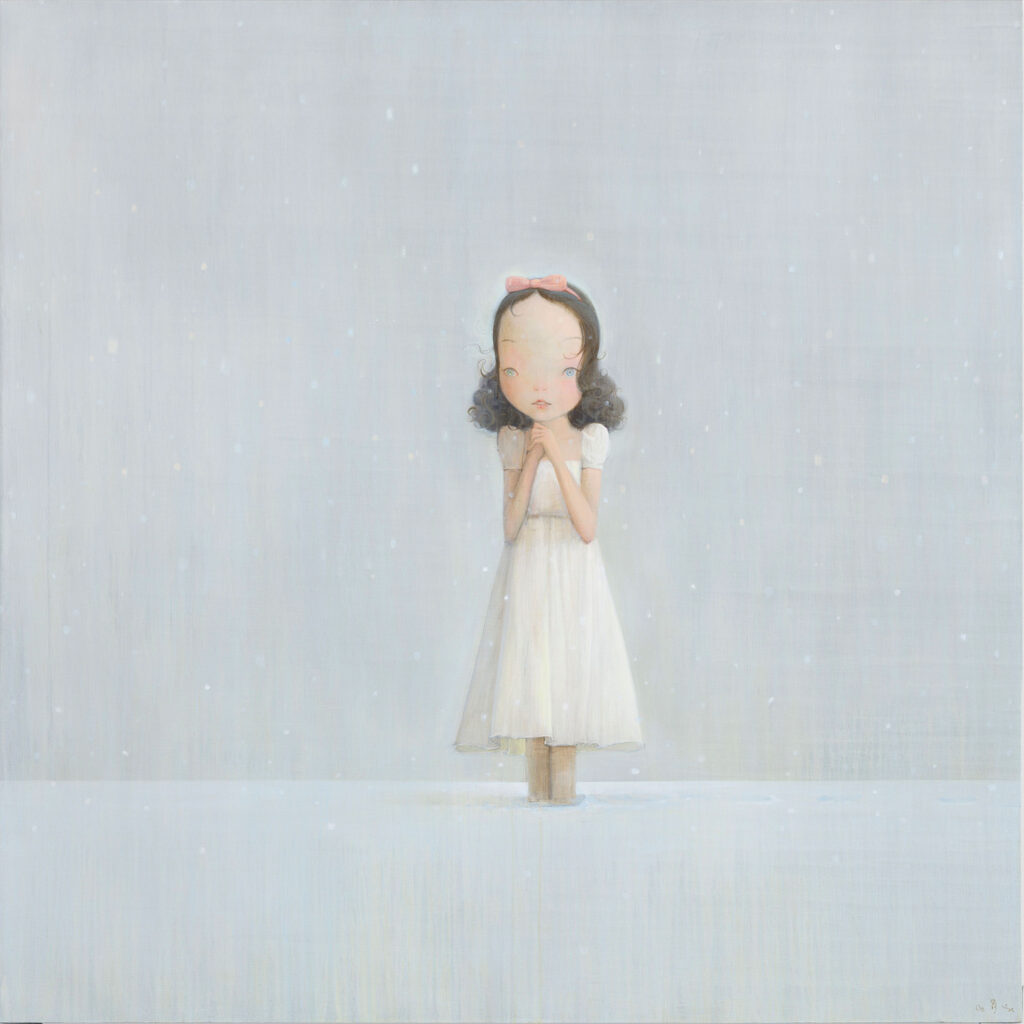
Celebrated for reinterpreting childhood imagery through a sophisticated, intellectual lens, Beijing artist Liu Ye captured the spotlight at Art Basel Hong Kong this year. His enchanting 2006 work, Snow White, sold for US$3.8 million (HK$29.8 million), underscoring the strong demand for the Chinese contemporary master’s most iconic literary subjects, particularly those drawn from fairy tales.
At first glance, Snow White appears disarmingly delicate. The heroine’s porcelain-smooth complexion, precisely rendered features and saturated crimson accents are hallmarks of Liu’s meticulous technique. His surfaces are flawlessly polished, almost enamel-like, revealing an extraordinary level of control. Yet beyond the technical refinement lies emotional complexity.
Completing his education in Berlin and influenced by Western modernism, Liu blends European cultural references with a distinctly contemporary sensibility. In Snow White, the familiar storybook character becomes a quiet meditation on identity, memory and cultural exchange. The composition’s minimal background intensifies the psychological focus, allowing the viewer to engage directly with the figure’s subtle expression.
Ville of Value

Zao Wou Ki’s Ville Chinoise was the headliner at a Sotheby’s auction in Hong Kong this spring, fetching US$2.6 million (HK$20.4 million) and demonstrating the timeless appeal of the late master’s cross-cultural vision. Born in Beijing in 1920 and later based in Paris, Zao forged a distinctive language that bridged continents. His paintings balance spontaneity with compositional harmony, reflecting an equilibrium between movement and stillness, and East and West.
Created in 1955, this work illustrates Zao’s transition from figurative to abstract style. It is also his only oil painting whose theme bows directly to his motherland. While he generally favoured a dark colour palette during this period, Ville Chinoise is treasured for its lighter tones – yellow, purple and a deeper blue merge dreamily into soft pastel blues.
The artist’s abstraction is never cold; it feels lived in, almost breathed onto the canvas, with brushstrokes that carry the cadence of Chinese calligraphy and the freedom of postwar European modernism. A Zao Wou Ki work is a cultivated blend of scale, nuance and cultural dialogue that feels effortlessly cosmopolitan.