
Works of Progress: Curated by Asians and committed to diverse conversations, Art Basel Hong Kong amps up the contemporary
Every March, Hong Kong becomes more than a financial capital or transit hub – it transforms into a living, breathing laboratory for contemporary culture. Art Basel Hong Kong, returning this year from 27-29 March, is not simply the Asian stop of an art-fair juggernaut; it’s a statement of the city’s importance on the world art map.
The Hong Kong fair feels unmistakably different this time: quieter in its confidence, sharper in its focus, and more committed than ever to the urgency of the present moment. Rather than leaning on spectacle or legacy alone, it has placed its weight on recent artistic production, Asia-led curatorial voices, and cross-regional dialogue that feels lived rather than theoretical. The result is a citywide cultural week that rewards thoughtful viewing and curiosity beyond the exposition booth.
The most telling development of Art Basel Hong Kong is the recalibration toward the now. While the fair has always been attentive to contemporary practices, the 2026 edition marks a more disciplined commitment to works made within the last five years. It reflects a world shaped by pandemic aftershocks, climate instability, accelerated digitalization and shifting geopolitical alignments.
Present Push
This emphasis crystallises most clearly in Echoes, a newly introduced sector that foregrounds recent creative output without framing it as emerging or provisional. Ten curated booths display works by up to three artists each, offering a compelling glimpse into the most current artistic applications and narratives. It reads like a pulse check on what artists are thinking, making and questioning at this exact moment.
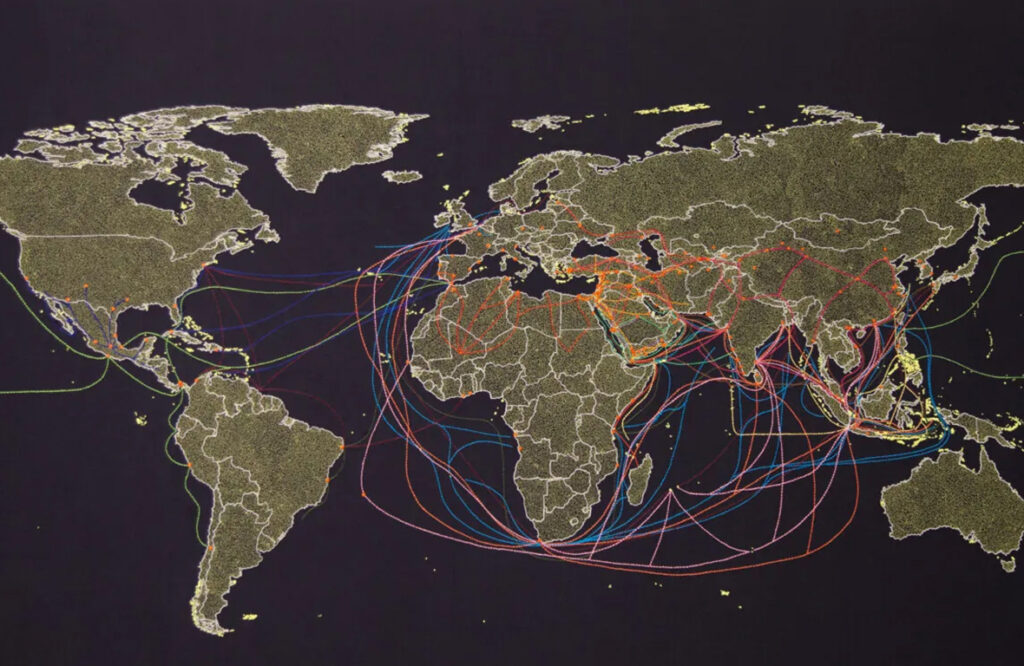
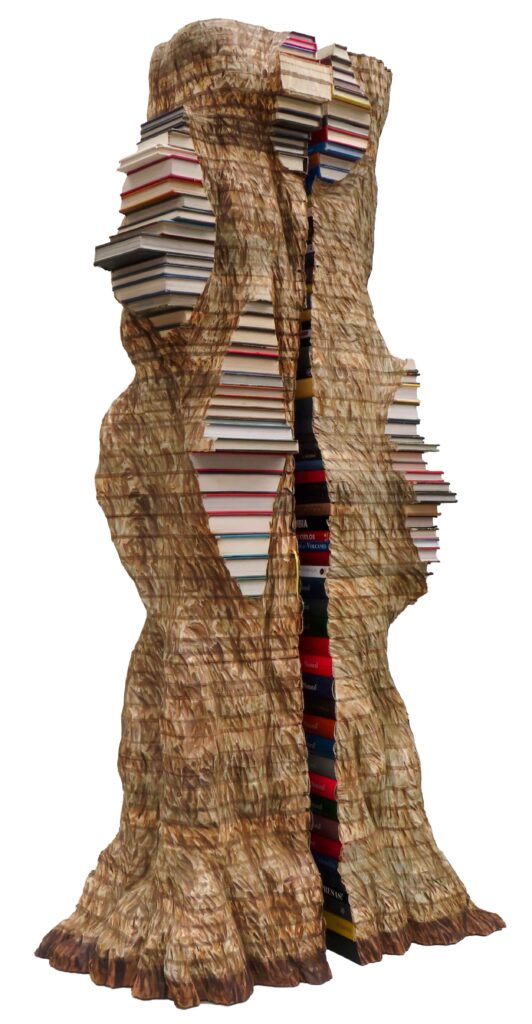
The works here are materially ambitious but conceptually intimate, grappling with issues like migration, ecological systems and the uneasy coexistence of technology and embodiment. Highlights include Vietnamese-American artist Tiffany Chung’s embroidered maps of spice routes and the carved book sculptures of Colombia’s Miler Lagos, both presented by Madrid gallery Max Estrella. An immersive spatial installation by Polish artist Natalia Załuska, displayed by Hong Kong’s Double Q Gallery, will also seize the imagination.
Walking through this new section will feel like entering a series of conversations already in progress. With textile works doubling as geopolitical maps, and sculptures referencing the fragile balance between nature and human civilisation, there is plenty to digest. Echoes resists easy categorisation, which is precisely the point: it insists that contemporary art is not a trend forecast but a lived condition.
Dominant Asia
Equally significant is who is shaping the fair’s intellectual spine. For the first time, all major curated sectors at Art Basel Hong Kong are overseen by Asia-based practitioners, signalling a structural rather than symbolic shift. This is not about replacing one dominant voice with another; it is about embracing multiplicity. Nowhere is this more evident than in the Encounters sector, long known for its monumental installations and large-scale gestures.
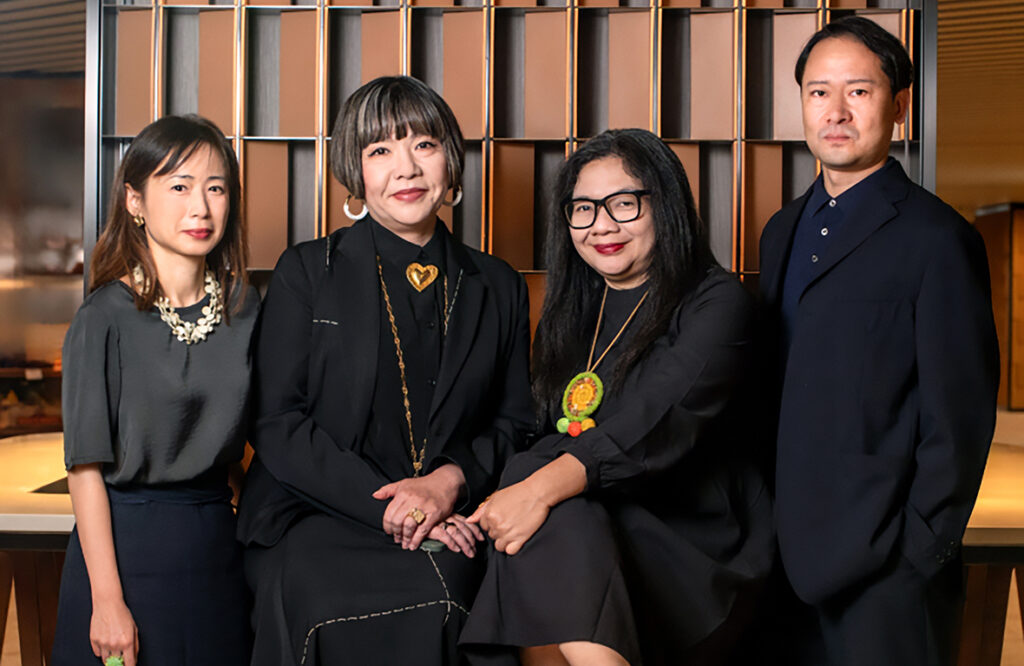
This year, Encounters adopts a collective curatorial model, bringing together voices from Hong Kong, Japan and Indonesia – namely M+ Visual Art Curator Isabella Tam; Director of Tokyo’s Mori Art Museum, Mami Kataoka, and her Senior Curator Hirokazu Tokuyama; and Jakarta-based researcher Alia Swastika. Instead of a singular curatorial narrative, the sector unfolds as a constellation of perspectives, sometimes complementary, sometimes deliberately dissonant.
The works here are expansive but not bombastic. Several projects are conceived specifically for the fair, underscoring a move away from transportable spectacle towards site-responsive thinking. Encounters feels less like an Instagram moment and more like a spatial essay, something to be read with the body as much as the eye.
Hong Kong Direction
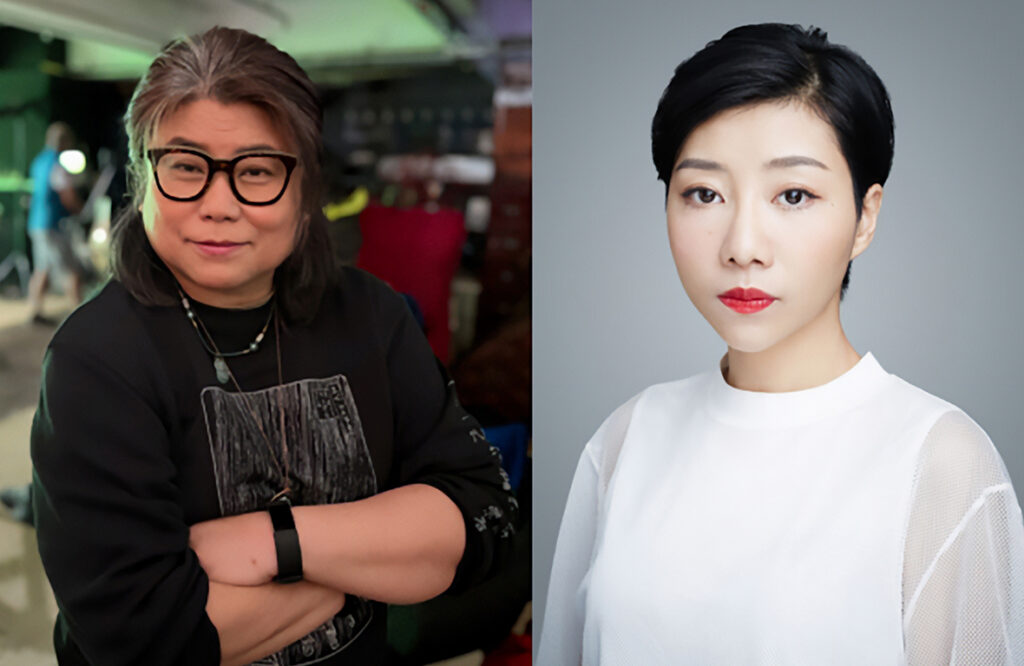
The Asia-led approach, which continues with Hong Kongers Ellen Pau and Venus Lau overseeing the Film and Conversations programmes respectively, subtly reframes the fair’s centre of gravity. The language of East meets West has long outlived its usefulness, and Art Basel Hong Kong seems keenly aware of that. Rather than positioning Asia as a regional subset within a global hierarchy, the fair presents the continent’s art as a network of nodes that are internally diverse, outward-looking and fully entangled with global cultural currents.
With pioneering video artist Pau at its helm, Film showings position moving image as both artistic medium and historical document. The curation spotlights artists who use time-based media to examine memory, surveillance, displacement and collective authorship. The day of Conversations, meanwhile, leans away from market prognostication towards institutional exchange. Lau, who serves as Director of Jakarta’s Museum MACAN, presents panel discussions that feel refreshingly grounded.
Confident Curation
Across the fair, the most compelling booths among 240 galleries from 42 countries this year are those that resist the temptation to overdisplay. Fewer works, thoughtfully installed, tend to reward sustained attention – mirroring the fair’s broader shift toward depth over density. Several established galleries stand out for their curatorial ambition rather than sheer scale. Equally important are those that have matured through the fair’s earlier sectors and now occupy the main floor with renewed confidence. These presentations often signal long-term institutional investment and are worth watching closely.
Art Basel Hong Kong newcomers include Tokyo’s A Lighthouse called Kanata, showcasing Japan’s renewed interest in abstraction through works by postwar masters and emerging painters, and Sydney gallery The Commercial, debuting works that interrogate Australian identity and colonial history. Pilevneli from Istanbul presents AI-generated works, porcelain sculpture and mixed-media installations, and New York’s Uffner & Liu focuses on artists examining distortion, transformation and disguise.
Beyond the Booths
What truly distinguishes Art Basel Hong Kong is how seamlessly it extends into the city itself. During fair week, Hong Kong becomes a distributed exhibition space, with museums, heritage sites and public façades activated in conversation with the fair.
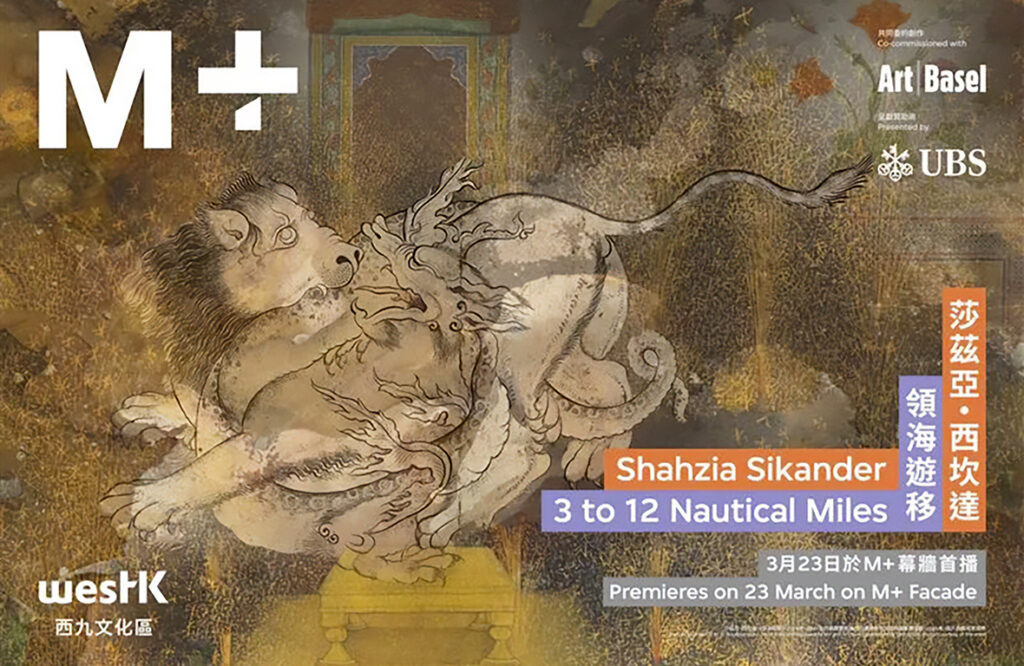
At M+, a major façade commission transforms the building into a luminous, city-scale canvas. This year, an animation of hand-painted watercolours by Pakistani-American artist Shahzia Sikander references historical trade routes and contemporary geopolitics, merging traditional visual languages with digital invention. Seen from a distance, it functions as both artwork and urban signal: a reminder that art here is not confined indoors.
Across the harbour, Tai Kwun pulses with energy during its annual Artists’ Night. Performances unfold across courtyards and corridors of the former Central Police Station, emphasising sound, movement and collective experience. In a counterpoint to the polished choreography of the fair, the atmosphere here is less formal and more experimental.
Meanwhile, independent spaces such as Para Site offer rigorously researched exhibitions that engage political, ecological and social questions head-on. These shows reward visitors willing to step off the main circuit, offering some of the most intellectually demanding and emotionally resonant experiences of the week.
Quiet Power
Taken together, Art Basel Hong Kong 2026 feels less like a market crescendo and more like a sustained conversation. Its power lies not in headline-grabbing sales or monumental gestures, but in its attention to process, authorship and context. The fair no longer asks viewers to marvel at scale alone; it invites them to listen.
For collectors, this means engaging with practices still in motion. For curators, it offers a snapshot of how Asia-based voices are shaping global discourse from within. For the culturally curious, it provides a rare opportunity to experience a city thinking out loud through art.
In March each year, Hong Kong does not simply host Art Basel; it becomes Art Basel. And in doing so, it reminds us that the most compelling art is not about predicting the future, but about understanding the present with clarity, complexity and care.