

Clothes Doors: PAKT founder Barbara Yu Larson on her lifelong love for clothes and keeping an open mind about what comes next
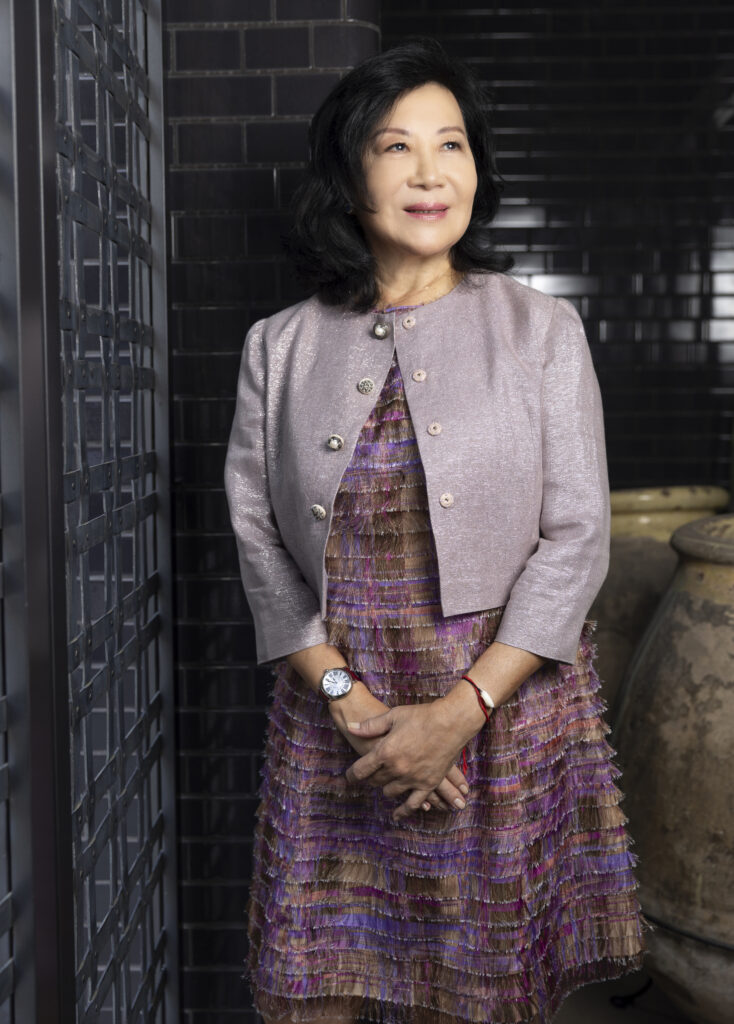
The sun is doing that particular Hong Kong thing where it turns every glass surface into a mirror and every outdoor table into a stage. Barbara Yu Larsson arrives at Soho House in Sheung Wan with her sunglasses still on, the residual glamour of a long-haul flight clinging to her like a well-cut jacket.
“I am always on the go, but I make sure I recharge and have enough sleep,” she announces, laughing as she settles in. Then, minus the usual entrepreneurial swagger, she offers something rarer than a perfect martini: honesty. PAKT, the clothes storage and wardrobe management business she founded a decade ago, is winding down its physical storage service.
“It’s never easy to admit that something so special to me is coming to an end,” she discloses. “PAKT has been my baby, and I’m proud of what we’ve accomplished. Maybe I was too ahead of the game, maybe not. But who knows what the future holds for me and PAKT, separately or together?”
The revelation lands softly, like silk folded away for another season. In an industry obsessed with perpetual newness, Yu Larsson has chosen the more radical act: acknowledging an ending with directness and positivity.
Sustainable Style Genes
Hong Kong became Yu Larsson’s adopted home in a delightfully circuitous way. Born in Taipei, she was raised in New York, where her father served as a diplomat, in a predominantly non-Chinese neighbourhood but never felt the need to shrink. Her strongest early memories are of her mother, almost always in a qipao, carrying her culture with quiet pride no matter the city.
“Clothing, in that household, was something to look after rather than replace,” she explains. Summers meant careful packing of winter woollens and furs with tissue paper and mothballs; winters meant airing and dry-cleaning until the chemical ghost of preservation finally lifted. That same conviction underpinned PAKT, a wardrobe service designed so clients could trust it with wedding dresses and other sentimental and specialty garments. Every item was inspected upon arrival to document its condition, then stored in controlled conditions between 19 and 21 degrees Celsius and 50-60 percent humidity.
The Accidental Advisory
Young Barbara was the perfect student – piano, ballet, academic excellence – yet her childhood also contained quieter hours translating American soap operas into Putonghua for her maternal grandmother. That dual fluency, cultural and linguistic, later proved useful in rooms far from any conservatory.
After Harvard, she became a Morgan Stanley analyst in New York. Then in the 1980s, she joined the Lehman Brothers’ government advisory team. The work took her to West Africa – Gabon and Togo – where fluency in French opened doors, and curiosity kept them open. She found herself conversing with senior officials, businesspeople and the occasional mercenary, rescheduling sovereign debt, structuring project finance, and opening up access to international capital markets.
One evening in Maputo remains vivid. At the guest house of the Governor of the Central Bank, she dined with two senior Lehman bankers and three leaders of the Marxist-Leninist Frelimo party.
“I surprised myself with my willingness to embrace the unexpected,” she recalls. The carefully mapped life had already begun to develop interesting detours.
Those high-pressure years taught her the non-negotiable value of deadlines. In a start-up culture that romanticises creativity, she insisted on the quieter discipline of responding promptly, finishing today what could be finished today, and accepting that a decision need not be perfect to be useful. “A decision can be a step forward; it doesn’t have to be the final word,” she argues.
PAKT Hunch
The original concept for a ‘circular’ wardrobe first surfaced in London in the mid-2000s. The ambition was larger than storage: styling, updating and redesigning existing pieces. The London Project was due to launch in September 2008, in the week Lehman Brothers collapsed, so it went into its own form of climate-controlled storage.
Two years later, when she and her family moved to Hong Kong, the idea was revived as personal necessity. Space was suddenly scarce; winter coats, wool suits and ski gear sat unused for most of the year. Existing storage options failed her private checklist: true climate control, digital visibility, and white-glove handling rather than casual van-tossing. A friend in venture capital offered practical counsel: meet 100 people before spending a dollar, and keep notes.
She did, and PAKT launched in 2016. The digital avatar that let clients virtually try on their own pieces, layer them and see how potential purchases from screenshots might work with their wardrobes was added later.

Designer Wardrobe
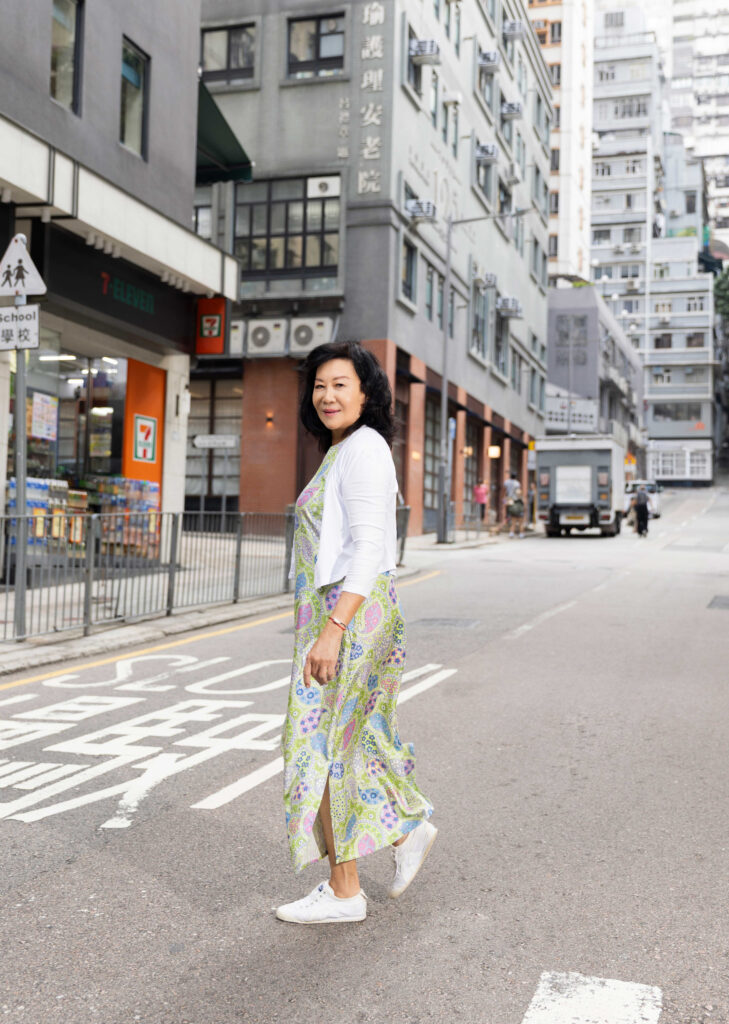
Yu Larsson’s own style has evolved over life stages. Corporate years demanded jackets and heels, while motherhood brought practicality and a deeper day-to-evening divide. Entrepreneurship in Hong Kong loosened the silhouette further – more trousers, less boardroom armour – yet the city still permits full glamour. “There’s nothing like a great party, putting on heels and dancing the night away,” she enthuses.
Chanel under Karl Lagerfeld remains a personal touchstone from the ’80s and ’90s. Paris couture house Lecoanet Hemant, discovered between African meetings, fused East and West inventively. Later came a friendship with independent couture designer Nadia LaValle, who shared her love of fabrics and helped shape her personal style. Today, Lisa Redman’s label adorns the majority of dresses she chooses to wear for this shoot.
Pastures New
To Yu Larsson, happiness, day to day, comes from good sleep, good food, champagne and exercise, whether karate, hiking or dancing. When she’s in the UK, horse riding adds to the mix. A fifth-dan black belt in Shotokan karate, she has a book with her sensei in the pipeline. She wants more time with her three adult children living across two continents, more volunteering and more writing. Mentoring young people and women in Hong Kong on English confidence and cross-cultural presentation skills appeals – her own life has been a long masterclass in code-switching.
And she keeps an open mind. Perhaps a trusted partner will continue the service; perhaps the digital wardrobe and avatar will find a new home. “I don’t think an idea’s value is measured only by whether its founder takes it through every stage,” she notes.
Memory Storage
Later she walks us through her spacious home in a designer-converted Hollywood Road tong lau. Drawers reveal clothes and shoes stacked with the same precision her mother and grandmother once applied to silk. Family portraits, including one of her great-great-maternal grandfather in Nanjing circa 1865, anchor the walls. “It’s important to know your roots – it keeps me grounded,” she states. Alongside the possibilities for PAKT, she is looking forward to more time for the pleasures already woven into her life. Dunhuang by the HK Ballet and a flutter at the racetrack are on the weekend’s agenda. Her usual bets are a modest HK$ 10 or HK$ 20. “I think I should bet even higher amounts,” she says, laughing. “What comes next remains open. Earlier in life, I had a fairly clear picture of what success was supposed to look like. Now, I’m less concerned with whether everything follows the original plan. Some of the most rewarding things in my life have come from departing from it.”
Interview, Text & Art Direction: Joseff Musa Photographer: Jack Law Videographer: Iris Ventura