

Bridge Partner: Translating his dual identity into business strategy, influential investor Chibo Tang connects East and West
We meet venture capitalist Chibo Tang on the same day Donald Trump lands in China for a face-to-face with Xi Jinping and a possible reset of superpower ties. Since Tang is a super-successful investor who sees himself as a bridge between East and West, this coincidental concurrence feels like fate – like the universe itself is orchestrating product placement, or magazine calendars and geopolitical giants accidentally have the same Wi-Fi password.
Tang, characteristically calm and composed, acknowledges the symbolism but doesn’t oversell it. The Hong Kong-based Managing Partner of Gobi Partners smiles like a man who’s heard too many ‘signs’ to be impressed by one more. Born in China and educated in the United States, he has turned that dual identity into a professional strategy. His story is one of connecting worlds, forging partnerships, and leading teams who play to win.
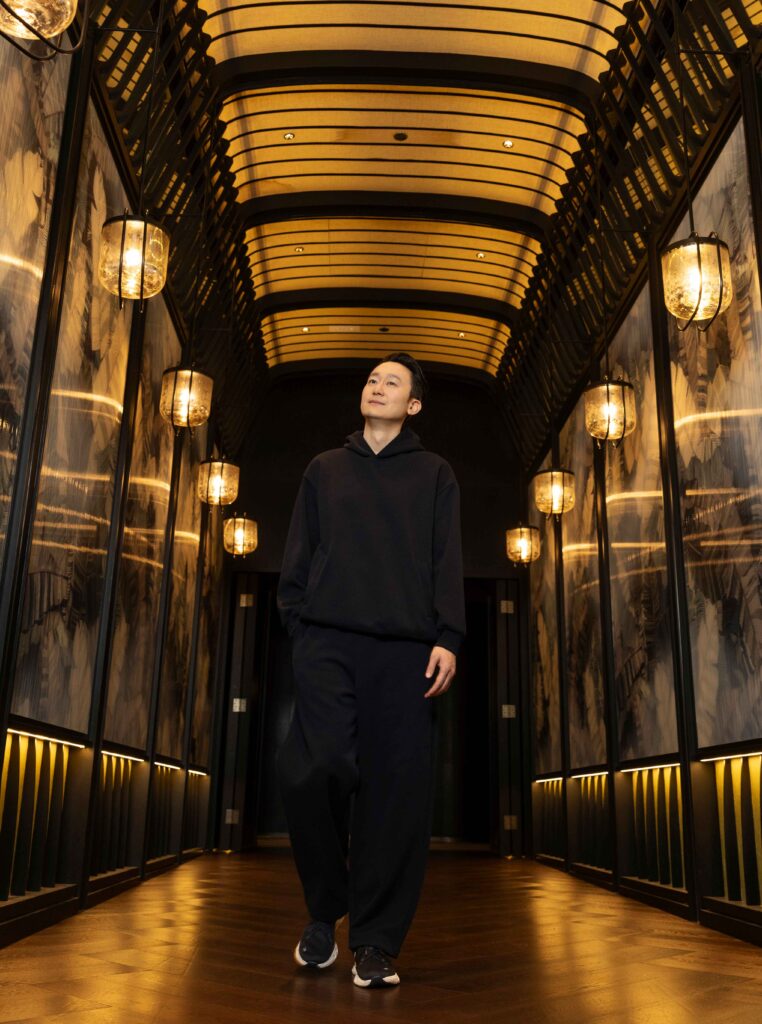
The parallel between our rather more humble get-together and the ground-breaking sit-down of world leaders in Beijing clicks even harder as we begin our cover shoot at Chinesology. The restaurant’s contemporary aesthetics reflect the value and beauty of reactivated Chinese cuisine, adding new elements without abandoning tradition. In short, Chibo Tang and Chinesology share the mindset that modern innovation should respect its roots, not bulldoze them. They’re both focused on translation, timing and balance, on bridging two worlds without losing the plot.

Values Asset
Tang talks like a man who’s seen enough cycles to know that the world never moves in straight lines, and yet, somehow, it moves. He doesn’t romanticise his origin story; he lays it out simply like a business founder explaining how they achieve product-market fit: “I grew up in a family of academics. [While] my parents brought me up with traditional Chinese values, I ended up spending a lot of time reading and gaming. By the time college applications rolled around, I was convinced that I didn’t want to be an academic. I wanted to explore an intersection of business and engineering.”
Then came a hiccup that highlights Tang’s mentality to a tee – when the universe says ‘no’, he treats it like data. He had set his heart on attending Olin College of Engineering in Massachusetts, yet despite a perfect SAT score of 1600, he didn’t get in. But he believes “everything happens for a reason”, and brings that same energy into investing.
Activating Plan B, Tang went to Harvard College and acquired a bachelor’s degree in applied mathematics and economics. “Ambition was all my own,” he says. “Grades and academic prowess never meant much to me. Straight As [only] mean that you’re good at taking tests. I look at results, not at résumés.”
Empathy Engine
It’s a tactic that has served him well in a career that kicked off as a management consultant developing consumer segment activation strategies, and spanned spells in Shanghai prior to assuming, in 2009, his current role at Gobi, one of Asia’s leading early-stage venture-capital firms.
The deeper you go with Tang, the more you realise the bridge isn’t just professional. It’s personal, and he doesn’t skip the hard part. “The toughest challenge was probably coping with the discrimination that comes with being an immigrant in a foreign land,” he confesses.
As one of just a handful of Asian kids growing up outside Boston, bullies were part of his early life when he moved to the US aged three. He credits his parents, who sent him back to China every summer, with shaping him into a blend of two worlds. “Ultimately, being able to identify as both cultures – relating with either and offending neither – is the perfect background to help bridge the two,” he states.
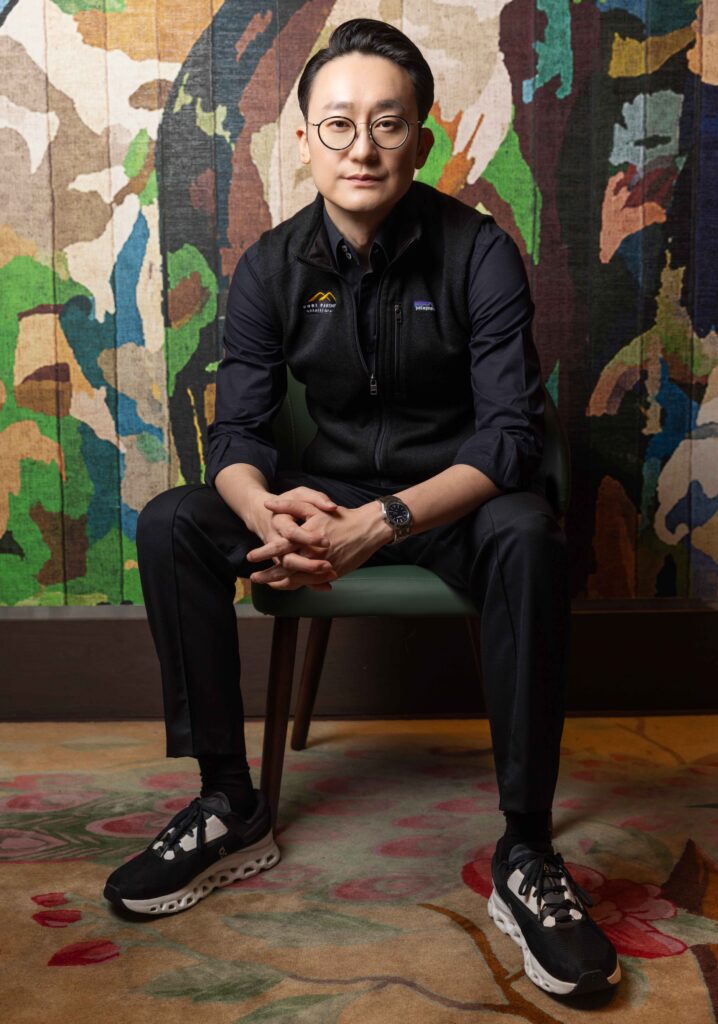
Tang might be described as the ‘chillest’ boss in venture capital. He’s often seen in a hoodie and running shoes, plus a carry-on suitcase, unladen with ego or entitlement. “Is it happy hour yet?” he laughs mid-shoot. “I think I need a mojito after all of these [photos].” He casually calls his assistant “dude” as if he’s managing a team but not trying to intimidate anyone into productivity.
Investor Intelligence
Yet his brain runs 24/7. He’s always thinking of more: how to offer more, help more, connect more. Even in conversation, his mind is doing what his role demands: turning relationships into opportunities. He shares that Gobi Partners has grown AUM (assets under management) more than 10-fold to nearly US$2 billion since he joined in 2009. Next year is Gobi’s 25th anniversary, and they have an internal target to triple their AUM over the next few years. Expansion into emerging markets along the Belt and Road is part of the impetus.
Tang has a structured way of sizing up startups. “The most basic framework is threefold – market size, product and team,” he says, breaking it down like a checklist. “I’ve also added a fourth dimension, which is capital market momentum.” Challenging the US$1 billion unicorn hype, he adds: “Unicorns are aspirational, but many fall back soon after reaching that status. Valuations are products of the market, and hype cycles can outrun fundamentals.”
He also references the decacorn threshold (startups privately valued at US$10 billion), explaining that many unicorns get stuck in a “middle-income trap” – too big to be acquired, too small for IPO against established mega-caps.
Heart Burners
Returns matter in the world of venture capital, though for Tang, being able to say “I helped bring these technologies to the world” is more satisfying. His philosophy of success hinges on managing burners – the life version of resource allocation. Outlining the four burners theory, he opines: “It is impossible to keep all burners going strong. Your time and energy are finite, and there’s family, friends, work and health. You can’t keep all burners high all the time. You must choose what to feed and what to let lower.”
He argues that true success is achieving balance, and happiness – like money-making – comes as a by-product of this, but with impact and meaning. To him, venture capital sits at the intersection of wealth creation and societal progress.
Ultimate Fate
Personally, he wants to keep expanding his global perspective, meeting at new ‘courts’ with people he can learn from. His big life lesson? “The journey isn’t the destination. Milestones are rest stops, not the finish line, and then the road onwards continues.”
He and his wife, Karen Wong, who accompanies him at the shoot, have been married for almost two years. He believes in the concept of yuanfen – fated affinity or destiny – and the couple used feng shui to guide their choice of wedding day.
Head in the Game
Outside of work, the six-foot-two millennial enjoys playing basketball. It’s mid-May when the NBA playoffs are in full swing, and he is following two teams, the Oklahoma City Thunder and the Los Angeles Lakers. In sport as in life, he believes in being the bridge between two viewpoints. Which brings us full circle. Our meeting ends in the same way as it began: musing on the idea of connection.
Bridging two worlds isn’t a slogan for Chibo Tang; it’s a skill, a strategy and a philosophy. At the end of the day, thriving in business and progressing as a team aren’t just about winning. They are about bridging, so different worlds can finally play on the same court.
Interview, Text & Art Direction: Joseff Musa Photographer: Jack Law Videographer: Iris Ventura Venue: Chinesology