

Stage Whisperer: HKAPA Director, Anna C.Y. Chan is instilling integrity and intellectual rigour into citywide performing arts
At 9 am on the dot, Professor Anna C.Y. Chan is already almost done with her hair and makeup – and only ‘almost’ because she’s expertly multitasking like someone who has spent a lifetime training her body to listen before it speaks. While her stylist makes final adjustments, the HKAPA honcho is on a conference call. As we arrive, she gestures towards her ears, wireless buds snug in place, and without breaking rhythm, flashes us a warm smile. She quickly ends the call, stands and proceeds to shake hands with the entire crew.
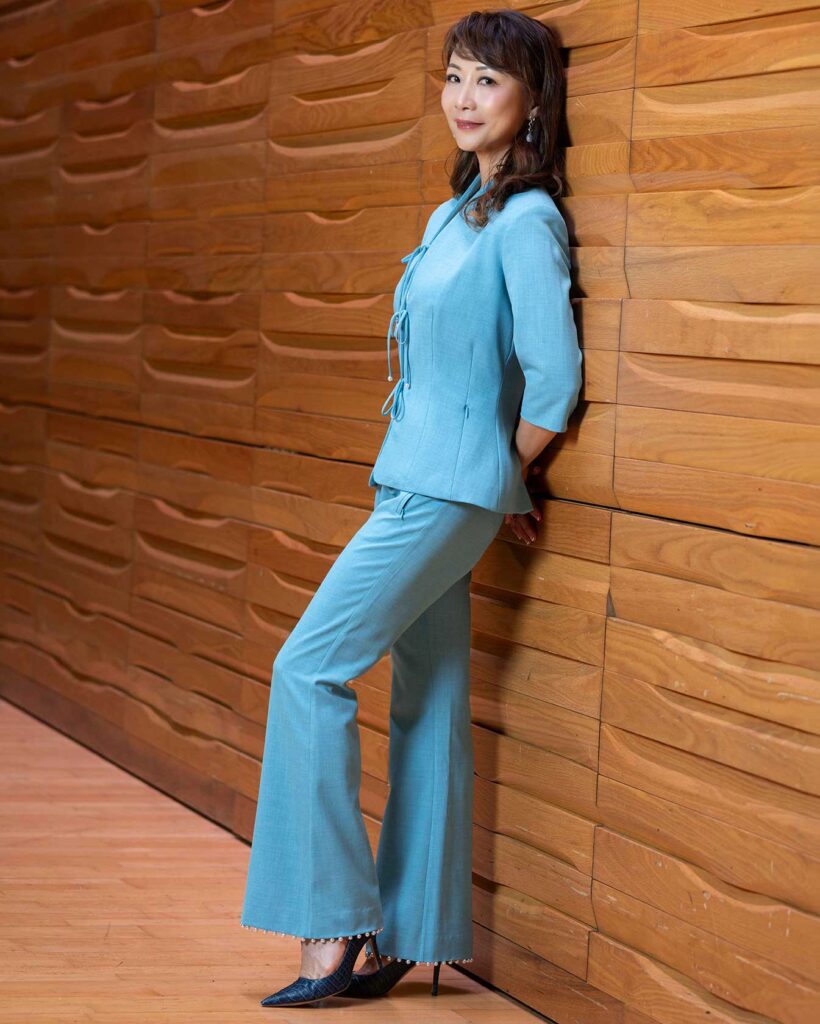
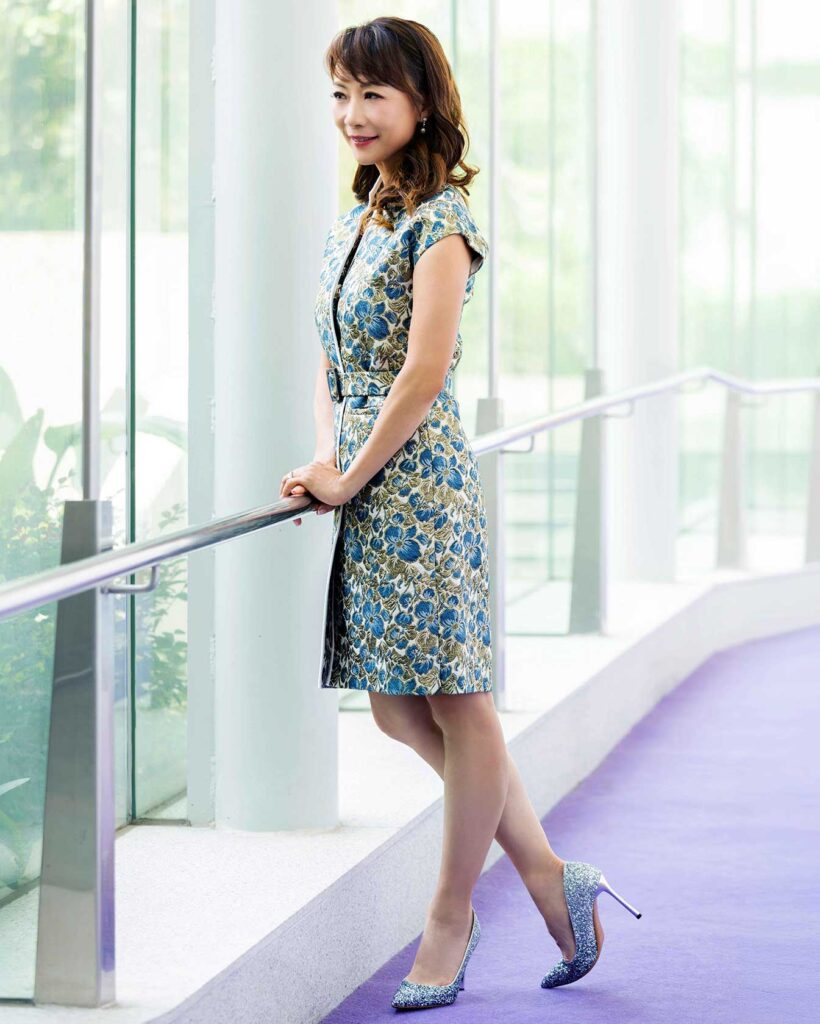
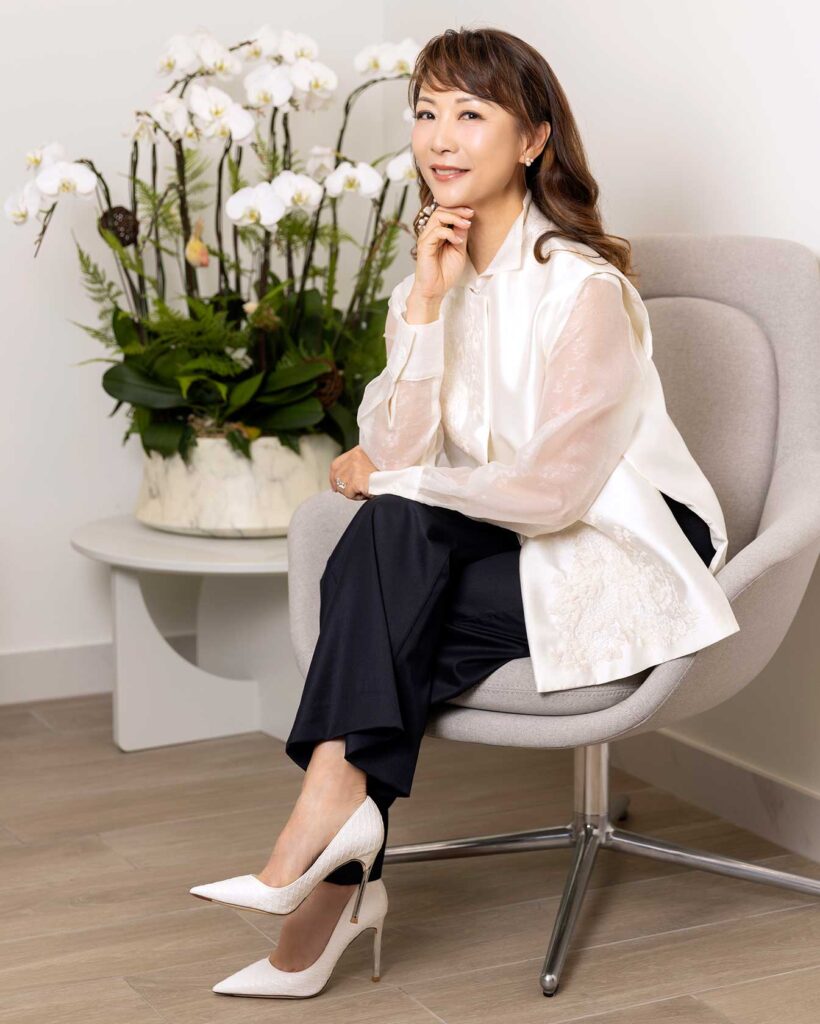
Chan confesses that she doesn’t really like shopping unless it’s for homeware. But, with a quick laugh, she confirms that she has “a full rack of designer clothes and shoes ready for today”. She then clarifies the deeper reason behind her wardrobe choices. Almost all of her clothes are from local designers.
For the 35-year veteran of Hong Kong performing arts, dressing is not about labels; it’s a quiet public service. “This is my way of showing support to the local art and creative sector,” she says. “Art is a very vast industry. It can be anywhere, really.”
Inside the naturally well-lit office of the Director of the HKAPA (The Hong Kong Academy for Performing Arts), the walls display taste and curiosity. Books are stacked and arranged, with fashion volumes such as Chanel and Dior near performing-arts tomes, including Why They Dance: Narrations of Hong Kong Dance, and photography books by Annie Leibovitz alongside family portraits.
Dance as Body Language
When Chan converses, she doesn’t speak like someone who manages art; she talks like someone who has lived inside it and then later built the structures that allow others to live there, too. “Becoming an artist is not only about skill but also about resilience, vision and meaningful contribution,” summarises the former professional dancer.
Young Anna studied at an Anglo-Chinese Catholic school, where music, drama and visual arts weren’t optional extras but part of the curriculum. “When I began ballet in the 1980s, I quickly realised it wasn’t only about technique,” she says. “Ballet teaches etiquette, posture, presence, and how to carry oneself with awareness and respect. Through it, I discovered that the body could become a language beyond words. Dance isn’t merely a performance; it’s communication and lifelong education in humanity.”
Her family had a strong business mindset, teaching responsibility, strategic thinking, resilience and long-term vision, but there was also a person who raised the bar. Her pivotal mentor, Hong Kong ballet pioneer Jean M. Wong, instilled technical excellence and uncompromising artistic integrity. As a teenager performing in community settings, Chan saw how dance could connect sectors of society and share beauty and cultural values beyond the stage. At the Royal Ballet School in London, teachers refined her standards and exposed her to international rigour.
Working professionally in London while pursuing postgraduate studies deepened her engagement with dance not just as performance, but also as research, scholarship and cultural discourse. Later, colleagues and mentors at the HKAPA and the West Kowloon Cultural District, where she was the inaugural Head of Dance, broadened her scholarly and global outlook.
Director Shift
Chan’s career pathway unfolded seamlessly: performer to educator to producer to arts administrator to cultural leader, each role expanding the others. “Those layered experiences across different landscapes strengthened my adaptability and expanded my vision beyond any one aesthetic. Even now, they continue to shape my commitment to performing-arts education that is culturally grounded, intellectually rigorous and forward-looking,” she affirms.
The transition from an artist to an institute director could have required a total reinvention. But Chan sees it differently: “What I had to relearn was scale and scope. Leadership demanded strategic planning, governance awareness, financial responsibility and long-term thinking. It became less about delivering excellence personally, and more about creating the systems and conditions that allow others to thrive.”
A natural performer, Chan quickly adapts to our cover shoot. She tries dance-inspired stances – clean lines, graceful timing – then suddenly shifts into some fun, wacky angles, before effortlessly switching back into more elegant expressions. From Plaudits to Passing on Passion
After decades of awards, publications and leadership, she speaks with gratitude first. “I feel deeply fortunate, because not everyone gets to pursue a career driven by passion,” she explains. “In earlier stages [of my career], success might have looked like achievements and milestones. But now my greatest fulfilment comes from witnessing the growth and success of others: students, colleagues, collaborators.”
However, she agrees that leadership can be isolating, especially when navigating complex decisions and carrying responsibility that ultimately rests on one’s shoulders. “I draw strength from strong bonds with my colleagues, students and stakeholders, because accountability may be personal, but the mission is shared,” she notes. “Resilience isn’t about standing alone. It’s about remaining connected to people, to values, to the larger vision collectively shaped.”
We discuss initiatives like the Jockey Club Dance Well project, which offers dance to people living with Parkinson’s. “It reshaped how I understand embodiment and dignity,” she enthuses. “Participants aren’t framed as patients receiving therapy. They’re approached as dancers creating art. That shift in identity is where true dignity resides.
“The arts are for all,” she champions firmly. “Access to performing arts education and participation can’t remain elite or concentrated. It must be citywide, reaching every district and community.”
Contributing to Society
As a government-funded academy, the HKAPA’s responsibility as framed by Chan is twofold: uphold artistic integrity and ensure the work contributes meaningfully to society. “Protecting artistic freedom begins with rigorous standards, encouraging critical thinking, and creating space for creative exploration in Hong Kong and the region,” she says.
In her view, artistic freedom and public value aren’t in tension; they align through purpose, quality and service. “Sustainable funding structures and fair commissioning policies matter so artists can focus on creation rather than constant survival. Institutions must also invest in research, documentation and development of new work rooted in local context, so artists aren’t only presenting but generating original ideas.”
Arts in the AI Era
When asked what she tries to pass on to the next generation, Chan returns to a human message: seeing dance as a platform for cultural dialogue and community engagement. As a performer, she learned discipline, integrity and humility. But the world her students enter is different now, shaped increasingly by AI, rapid technological change and shifting professional landscapes.
“Beyond professional rigour and ethical responsibility, I want students to develop digital literacy and critical thinking,” she asserts. “They should be able to work alongside technology without losing artistic voice.”
She also emphasises adaptability, cross-disciplinary collaboration, and a strong moral compass, especially around authorship, data ethics and cultural sensitivity. “Remaining curious, always, is essential,” she adds. “Ultimately, I hope to equip them to sustain careers in the performing arts and also become cultural leaders who navigate an AI-driven society while preserving the humanity at the heart of the arts.”
Picture Perfect
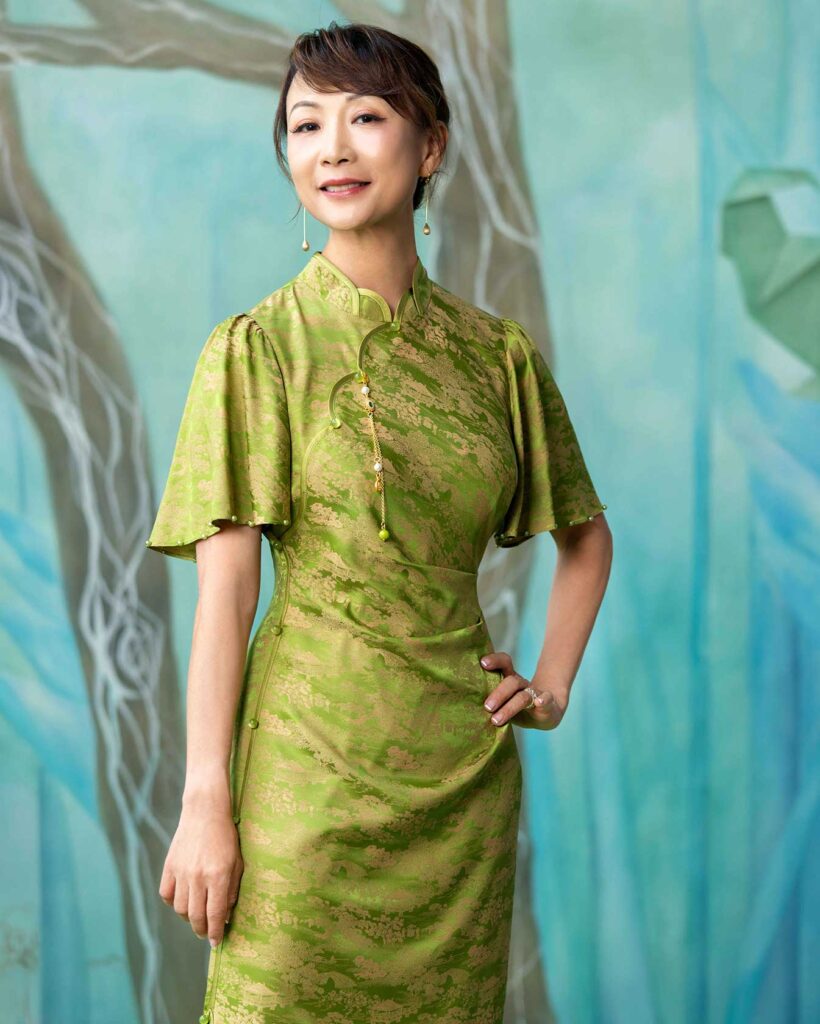
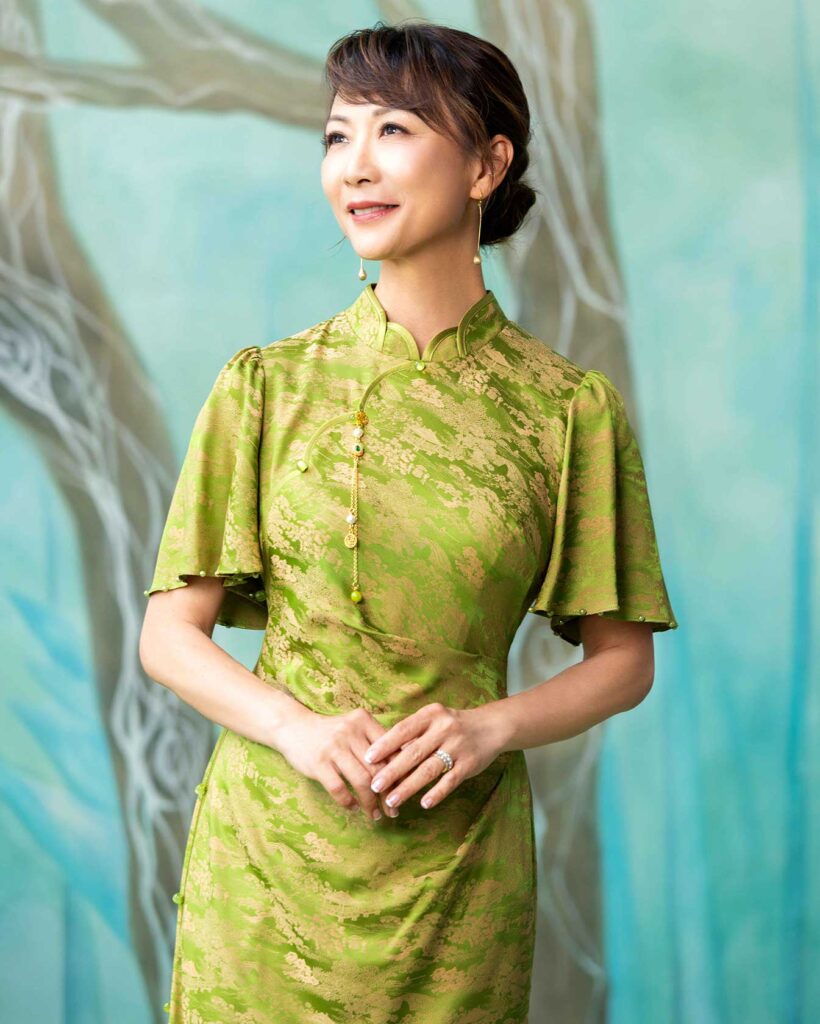
Towards the end of our photo session, Chan requests to pose against a giant mural created by HKAPA students. “This is my way of supporting the arts, my students and the academy,” she says. Then, with a gentle reminder that underscores her leadership philosophy, she adds: “At the end of the day, this is not about me. This is about promoting and supporting the art scene we have here in Hong Kong.”
As the crew packs up, it’s hard not to see the through-line of our audience with Professor Anna C.Y. Chan – technique, integrity, curiosity and community, working together like choreography.
Interview, Text & Art Direction: Joseff Musa Photographer: Jack Law Videographer: Iris Ventura